“The biggest challenges in sourcing synthetic DNA are turnaround time, customisation, logistics and supply reliability”
November 01, 2026 | Sunday | Views | By Mansi Jamsudkar Padvekar
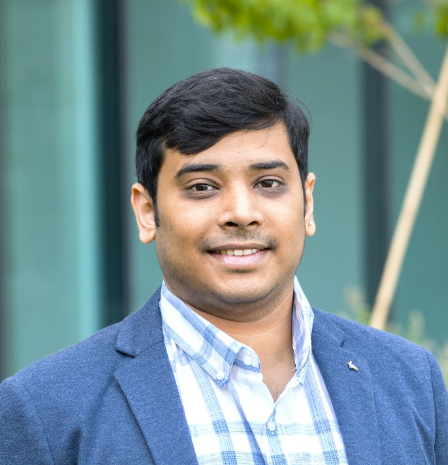
India’s growing synthetic biology ecosystem is driving demand for faster, customised DNA synthesis. Against this backdrop, Imperial Life Sciences (ILS) has partnered with DNA Script to bring its SYNTAX on-demand DNA synthesis platform to Indian laboratories. In this interaction with BioSpectrum India, Dr Nagabhihsek Sirpu Natesh, Application Scientist–Instrumentation (Pan India), ILS, discusses the technology’s potential, adoption challenges and market outlook.
What prompted you to partner with DNA Script, and what market opportunity do you see for on-demand DNA synthesis in India?
Imperial Life Sciences saw a strong opportunity because India is rapidly expanding in genomics, synthetic biology, gene editing and advanced research, while DNA synthesis is still largely dependent on external suppliers. DNA Script's SYNTAX platform brings the ability to synthesize DNA on demand, directly within the laboratory, which can significantly improve turnaround time, flexibility and supply reliability. We see this as an important next step in building India's self-reliant and decentralised synthetic biology ecosystem.
How is demand for DNA and oligonucleotide synthesis evolving, and which segments are driving it?
Demand is growing rapidly, particularly from academic research institutes, biotech companies, genomics laboratories, pharmaceutical R&D, CROs and synthetic biology groups. Researchers are moving toward more complex and iterative experiments, where they need DNA constructs and oligos quickly. As the number of genomics and gene-editing projects increases, the need for faster and more flexible DNA synthesis will also increase.
What challenges do Indian researchers face when sourcing synthetic DNA?
The biggest challenges are turnaround time, customisation, cost for smaller or urgent projects, logistics and supply reliability. When researchers depend entirely on external suppliers, even a relatively small delay can affect an entire experimental workflow. In research, being able to generate the required DNA when you need it can make a significant difference to productivity.
Which sectors will be the earliest adopters of SYNTAX in India?
I would expect biotech and synthetic biology companies, leading academic institutions, genomics laboratories, CROs and pharmaceutical R&D to be the early adopters. These organisations already have strong DNA synthesis requirements and understand the value of reducing turnaround time. Academia will also be important because it can expose students and researchers to next-generation synthetic biology workflows.
What are the biggest barriers to adoption?
Initially, I think the biggest barriers will be awareness, understanding the economics and changing established procurement practices. Customers are familiar with outsourcing DNA synthesis, so moving toward an in-house model requires them to understand where SYNTAX provides a genuine advantage. Demonstrating real-world applications and total cost of ownership will therefore be very important.
Can decentralised DNA synthesis reduce dependence on overseas suppliers?
Definitely. One of the strongest advantages is supply-chain resilience. If critical DNA can be synthesized within the laboratory, researchers can reduce their dependence on international shipping, external supplier timelines and potential supply-chain disruptions. This aligns very well with India's broader objective of developing greater domestic capability in advanced biotechnology.
How will demand develop over the next 3–5 years?
We expect DNA synthesis to become increasingly important as India expands in genomics, gene editing, synthetic biology, cell and gene therapy, molecular diagnostics and advanced therapeutics. As these fields mature, researchers will require faster design-build-test cycles. I believe on-demand DNA synthesis will increasingly become an important enabling technology rather than simply another laboratory service.
Is there a growing preference for bringing DNA synthesis in-house?
Yes, particularly among organisations that have high-volume, time-sensitive or highly customised DNA requirements. The motivation is not necessarily to replace external suppliers completely, but to bring critical or frequently required synthesis workflows closer to the researcher. An in-house capability gives laboratories greater control over timelines and experimental iteration.
What technical and after-sales support will Imperial provide?
Our role will go beyond simply supplying the instrument. We will provide installation coordination, user training, application support, troubleshooting and ongoing customer engagement. We want customers to become productive on the platform quickly and to have a strong support system throughout adoption. We also see application development and customer education as important parts of building the market.
What role does Imperial see beyond distributing SYNTAX?
Our ambition is to become a technology and application partner for India's synthetic biology ecosystem, not just a distributor. We want to help customers identify applications, establish workflows, train users and build collaborations across academia, biotech, pharma and research institutions. Ultimately, our objective is to help create a stronger DNA synthesis and synthetic biology ecosystem in India, with SYNTAX being an important part of that journey.
Mansi Jamsudkar Padvekar
mansi.jamsudkar@mmactiv.com