"We aim to raise the standard for compliant quick commerce in healthcare"
October 28, 2026 | Wednesday | Views
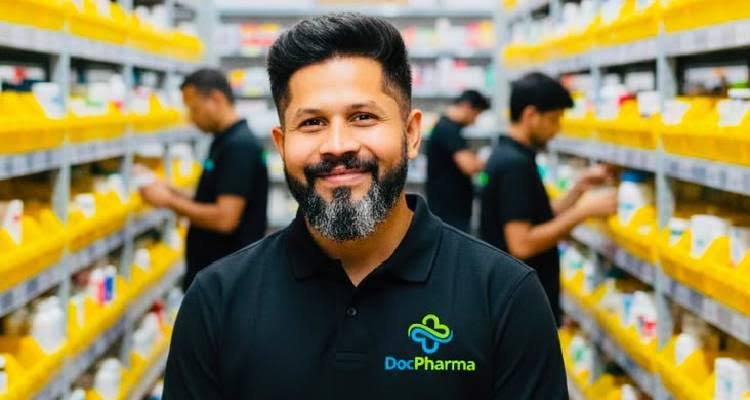
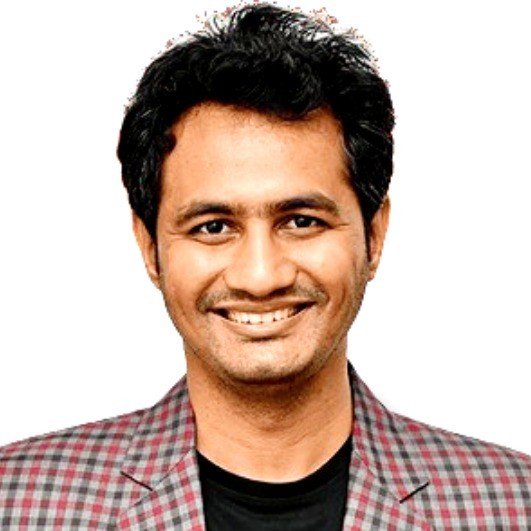
As India’s digital healthcare ecosystem expands, the challenge extends beyond placing orders online to ensuring medicines are delivered safely, accurately and on time. Bengaluru-based startup DocPharma is addressing this gap through a technology-led, pharmacist-supervised fulfilment network that connects e-pharmacies, hospitals, insurers and wellness brands with licensed dark stores and last-mile delivery. In this context, BioSpectrum had the opportunity to interact with Saquib Ali, Co-founder of DocPharma, to discuss the company’s growth, strategic partnerships, technology-led operations and vision for shaping the future of healthcare commerce in India.
What have been DocPharma’s most significant developments over the past year, and how have they strengthened the company’s market position?
Over the past year, DocPharma has moved from building a model to running healthcare-grade infrastructure at scale. We raised a $2 million pre-Series A led by Equentis, with 100Unicorns, Vinners and strategic angels participating, and we have fulfilled over 800,000 orders at a fulfilment rate above 90%. We have also opened over 20 dark stores. Today we serve 30+ healthcare and wellness platforms across 12+ cities.
Just as significant is what we built along the way. DocPharma One, our own end-to-end technology stack, runs every order from prescription validation to doorstep. Our own last-mile fleet keeps delivery in our control, and pharmacist-led compliance sits on every order. We also built an OMS that routes each customer to the nearest dark store, and AI-driven inventory prediction that keeps the right products in stock.
Medicines need licensed handling, prescription validation and pharmacist oversight. By combining that compliance with 30-minute delivery in a single system, we have become the supply chain that e-pharmacies, insurers, hospitals and wellness brands can plug into, without building their own.
How is DocPharma collaborating with audiologists, hospitals, and healthcare institutions to improve patient outcomes?
Better patient outcomes start with the right medicine reaching the patient correctly and on time. Every order we handle sits under pharmacist oversight, and prescriptions are validated before dispensing, which keeps the prescriber’s intent intact from the clinic to the doorstep.
Audiologists are a natural partner. About 63 million Indians have significant hearing loss, yet estimates put the number of audiologists at only 2,500 to 6,000, against a benchmark need of about 56,000, with access weakest outside the cities. Patients often need ear-care medicines, hearing-aid batteries and accessories between clinic visits. Our network can deliver what the audiologist or ENT specialist recommends, with pharmacist-verified prescriptions where needed, so care continues at home and follow-ups are not lost to distance. We are developing these collaborations with clinics and hearing-care providers.
Hospitals plug into DocPharma to solve two recurring problems. The first is the discharge window, when research shows the risk of medication mismanagement is highest, so medicines must reach the patient quickly and accurately. The second is pharmacy supply: Indian hospital pharmacies cite stockouts and expiry as their main inventory challenges. Our inventory intelligence and replenishment network help keep the right stock available.
With clinicians and care teams, we close the loop between a prescription and a delivered medicine. Traceable orders help care teams confirm that the patient received the right medicine, and the same data helps institutions and insurers measure adherence.
What recent partnerships or collaborations have contributed to growth, and are any new strategic alliances in the pipeline?
Our growth has been partner-led, and the past year added important names. We have partnered with few big industry giants like Healthcart, Platinum RX and Wellversed, and we are expanding aggressively with Tata 1mg along . What makes these partnerships work is integration, not just distribution. Each partner connects to DocPharma One and immediately gets real-time inventory visibility, order routing to the nearest compliant dark store, live tracking and prescription-compliant processing, backed by our licensed stores and our own fleet. They serve customers in minutes without building a supply chain of their own. Together with our other partners, we now serve 30+ platforms across e-pharmacies, health insurers, hospitals, corporate wellness platforms, D2C wellness brands and pet-care businesses.
The pipeline is just as strong, with discussions at a very advanced stage across e-pharmacies, quick commerce platforms, health insurers and D2C brands. Each brings a different integration: e-pharmacies and quick commerce platforms bring volume and demand data, D2C brands bring recurring demand that needs dependable replenishment, and insurers bring cashless claims that run on the item-level data DocPharma One captures at every order. Every new partner adds demand signals, store density and delivery data, which sharpens our forecasting and shortens delivery times for the whole network.
What are the biggest untapped opportunities in India’s healthcare market, and how is DocPharma positioning itself to capitalise on them?
Five opportunities stand out. Each is a gap between demand that already exists and infrastructure that does not.
Chronic care. India has about 101 million people with diabetes and 315 million with hypertension, yet some Indian studies find that more than half of patients are not adherent to their medicines, citing cost and forgetfulness. Reliable monthly refills are an unmet need.
An ageing population. The population aged 60 and above is projected to rise from 100 million in 2011 to 230 million by 2036, and about 75% of the elderly have at least one chronic disease. Many need medicines delivered to the doorstep.
Insured outpatient care. Under 0.1% of a $37.7 billion OPD market is insured, and outpatient and day-care cover is projected to grow at more than 18% a year through 2031.
An inefficient medicine supply chain. India has more than 12.4 lakh licensed chemists, mostly independent, and an average offline pharmacy carries 6,000–8,000 SKUs against 50,000 or more online. A 2022 GS1 India and AHPI study found that Indian pharma companies hold 98 days of inventory against 64 for best-in-class peers, and more than half of manufacturers lose about 1% of sales to expiry and pilferage.
Online and quick-commerce health. India’s e-pharmacy market is estimated at $3.5 billion in 2025 and projected to reach $8.6 billion by 2031. Wellness and consumer health brands want to deliver in minutes, but few can build licensed storage, pharmacist oversight and last-mile delivery on their own.
We are positioning for all five with licensed dark stores close to consumers, pharmacist-led compliance, AI-driven demand prediction and an OMS that routes each order to the nearest store. We plan to add 100 dark stores and grow from 12+ to 50+ cities.
What investments in technology, infrastructure or partnerships are required to support the next phase of growth?
We need to invest in four areas.
Technology: claims and insurer integration on DocPharma One, readiness for national standards such as the National Health Claims Exchange, stronger AI forecasting, and data security and consent management.
Infrastructure: the 100 new licensed dark stores, temperature-controlled storage where required, and a larger last-mile fleet.
Partnerships: insurers, administrators, hospital groups, e-pharmacies and corporate wellness platforms that bring volume and benefit design.
People and compliance: more pharmacists, quality and compliance specialists, and a larger technology and operations team.
The capital we have raised gets us started, with total funds raised of $2.5 million. The next phase will need further funding. Our principle is to invest in whatever makes each order accurate, traceable and on time, because that is what platforms buy from us.
What role does DocPharma envision in shaping the future of India’s healthcare ecosystem, and what long-term impact does it aim to create?
We want DocPharma to be the compliant infrastructure layer behind India’s healthcare commerce, the fastest and most reliable supply chain for all healthcare needs.
Whether the customer is an e-pharmacy, a quick commerce platform, a D2C brand or an insurer, they should be able to plug into one compliant network and offer medicines and health products in minutes.
In practice, that means three shifts. The first is from pay first and claim later, to cashless at the point of order. The second is from fragmented, manual pharmacy processes, to one standard in which every order is validated, itemised and traceable. The third is from medicines that take hours or days to arrive, to minutes, in 50+ cities. These support IRDAI’s “Insurance for All” vision for 2047.
Over the long term, we aim to lower out-of-pocket spending, make insurance benefits that people can actually use, and raise the standard for compliant quick commerce in healthcare. Our tagline says it best: elevating healthcare together.
Vrushti Kothari
(vrushti.kothari@mmactiv.com)