“TB diagnostics is moving from detection alone to comprehensive, timely and reliable insights that can guide treatment”
November 01, 2026 | Sunday | Views | By Dr Manbeena Chawla
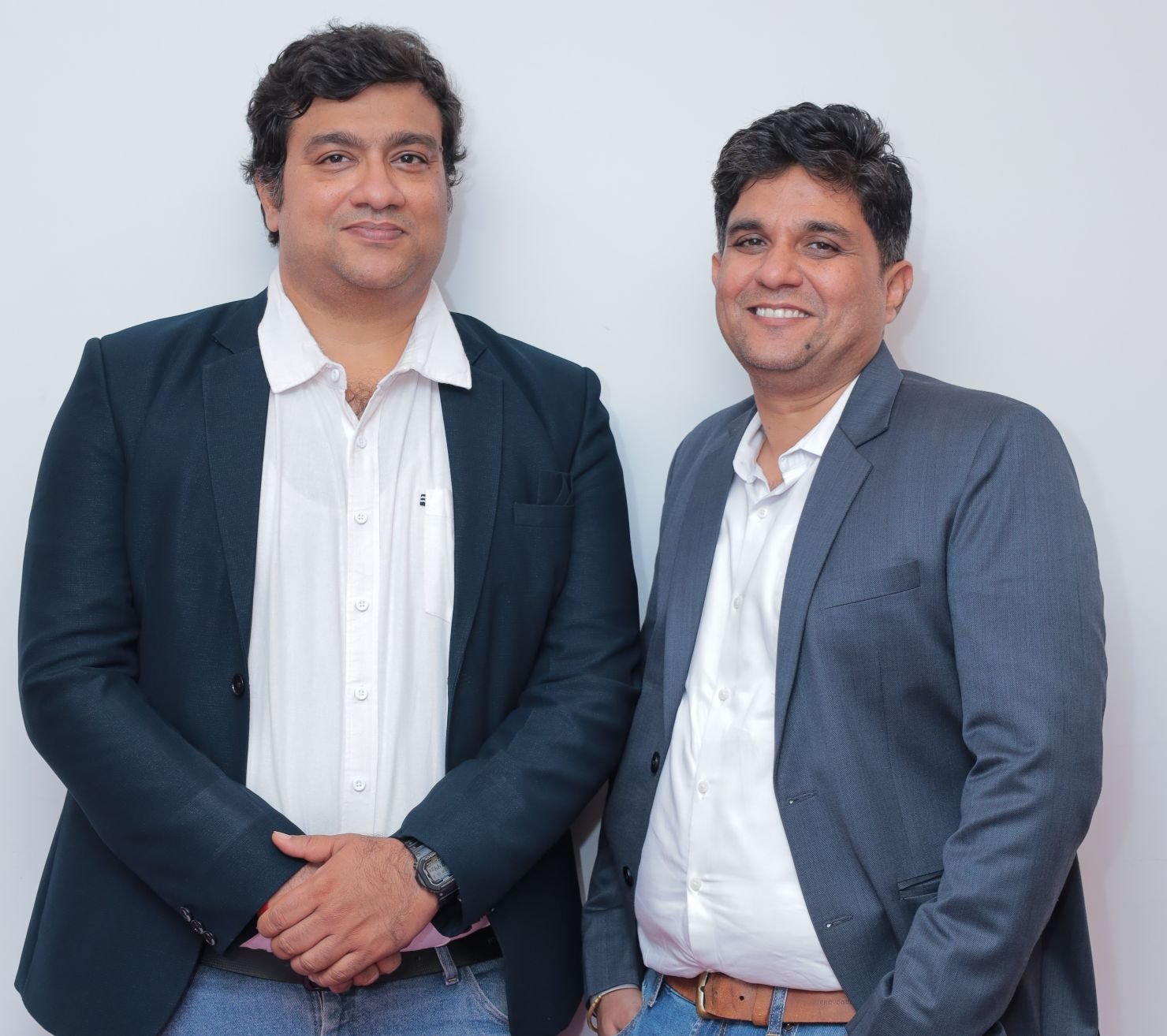
Mumbai-based HaystackAnalytics is making genomics accessible, applicable and affordable through a growing network of Genomics Centres of Excellence (GCEs) throughout India. With 40+ already established, the plan is to complete 100 in the next few months. With rising concerns over antimicrobial resistance (AMR), tuberculosis (TB), and emerging infectious diseases, India urgently needs scalable genomic tools that can be seamlessly deployed in hospitals and labs without complex setup requirements, and Haystack is making significant milestones in this direction. To find out more about it, BioSpectrum India spoke in detail with the company’s founders Dr Anirvan Chatterjee (L) and Gaurav Srivastava (R).
India experiences a wide range of infectious diseases influenced by geography, climate, and population density. What are the current challenges facing the diagnostics market for infectious diseases in India?
Dr Anirvan Chatterjee: Infectious diseases remain a persistent challenge for healthcare systems worldwide, and India is no exception. The complexity lies not in one type of infection, but in the diversity of bacterial, viral and fungal infections clinicians encounter, often with overlapping clinical presentations. The challenge is not simply treating these infections; it is detecting them accurately and early enough to guide treatment. When the infection is not identified accurately, or its resistance profile remains unknown, treatment often has to begin empirically, sometimes with broad-spectrum antibiotics. That diagnostic uncertainty has consequences beyond the individual patient. It can contribute to unwarranted antibiotic use, creating conditions that accelerate antimicrobial resistance. Then there's access. Comprehensive diagnostics remain concentrated in larger, well-resourced hospitals, leaving many settings without timely access to them. For us, the diagnostic challenge is therefore not one problem or one pathogen, it is the need for faster, more comprehensive and reliable detection across the infectious-disease spectrum.
How is Haystack leveraging its capabilities to address those challenges?
Gaurav Srivastava: At HaystackAnalytics, we are leveraging genomics to make infectious-disease diagnosis faster, more comprehensive and more actionable, enabling clinicians to access deeper insights from a single clinical sample. Our technology combines next-generation sequencing (NGS), advanced genomics and bioinformatics to deliver culture-free pathogen detection within 24 hours, enabling broad pathogen identification and insights into antimicrobial resistance. Our focus has been to bring both accuracy and comprehensiveness closer to the patient, through genomic solutions that are portable, deployable and clinically validated. Importantly, our offering extends beyond the diagnostic test itself. We have built an integrated ecosystem spanning sample-preparation technologies, sequencing, bioinformatics and software, supported by the infrastructure required to translate complex genomic data into clinically usable insights. Over the past three years, we have focused on developing and validating these solutions and building the capabilities required for their clinical deployment. We are already translating these capabilities into solutions for real clinical challenges, including TB, where rapid and comprehensive genomic analysis can help address drug resistance and reduce dependence on empirical treatment. Till date, we have 40+ Genomics Centres of Excellence and a growing network of hospital and clinical partners, bringing genomic analysis closer to patients and into clinical practice.
What new initiatives have you undertaken for rapid and reliable detection of infectious diseases, and how?
Dr Anirvan Chatterjee: Our work in infectious disease diagnostics is focused on making comprehensive pathogen and antimicrobial resistance detection faster and more accessible. This vision is embodied in infexn-NGS, our targeted sequencing-based diagnostic platform designed to deliver broad infectious disease insights from a single clinical sample. infexn-NGS enables pan-bacterial and pan-fungal detection, alongside the detection of all major respiratory viruses and major neuropathic viruses, while simultaneously identifying key antimicrobial resistance genes (ARGs) in a single test. By combining targeted with advanced bioinformatics, the platform delivers this comprehensive genomic insight within 24 hours. This approach complements conventional diagnostic methods, with infexn-NGS targeting predefined resistance markers to provide a broader view of the infectious agent and its potential resistance profile. The focus is not only on developing advanced technology, but on taking it closer to patients and making it deployable at scale, so that faster and more comprehensive diagnostics can translate into earlier clinical decisions and, ultimately, better patient outcomes. Infectious disease and AMR are global challenges, and we believe the solutions must be equally scalable. Our aim is to take the capabilities we have developed in India and make advanced genomic diagnostics accessible across healthcare settings and geographies.
Could you outline your current and planned partnerships with hospitals and diagnostic labs across India?
Gaurav Srivastava: For a technology such as genomics, scale cannot be built in isolation. It has to be built alongside clinicians, hospitals and diagnostic laboratories that understand the realities of patient care. As a result of which we introduced the GCE model. It is a partnership model that enables hospitals and laboratories to integrate advanced genomic infectious disease diagnostics into their existing workflows without setting up a complete sequencing ecosystem independently. Our GCEs are accessed by 650+ hospitals and labs, across 2500+ doctors for infexn-NGS. We are also seeing adoption across leading healthcare institutions, including Max Hospitals, Lilavati Hospital, HN Reliance Foundation Hospital, Bombay Hospital and Government Medical College networks, among others. Our next phase is about deepening clinical relevance and expanding access across diverse healthcare settings. We are also exploring international partnerships, with discussions underway with organisations including the NHS, as we look to take our genomic diagnostic capabilities to global healthcare systems.
How can India address the growing burden of hospital-acquired infections?
Dr Anirvan Chatterjee: Hospital-acquired infections thrive where surveillance is weak. Prevention, hygiene, infection-control protocols, are the foundation. In addition to prevention, hospitals need to have a real-time dashboard of the microbiome and antibiogram or relevant niches. This is particularly important in the context of AMR. Antibiotics are sometimes initiated empirically because of diagnostic uncertainty, and current technologies may not always provide the breadth or speed needed to confidently escalate or de-escalate therapy. This can result in antibiotic use continuing beyond what is clinically required. That’s the gap we’re addressing through our GCE model. By bringing genomic diagnostics closer to the point of care, we can provide comprehensive pathogen and resistance information to support protocol-based therapy, helping clinicians decide what to start, when to escalate, and when evidence supports de-escalation. The goal is not simply to detect infection, but to reduce uncertainty around antibiotic need and use. That is where technology can make antimicrobial stewardship more actionable, helping hospitals move from empirical treatment towards evidence-led therapy and strengthening their response to AMR.
How does Haystack plan to expand its presence in India and globally?
Gaurav Srivastava: Our ambition is not simply to expand our footprint, but to make clinical genomics more consequential in everyday clinical practice. In India, that means expanding our network of hospitals, laboratories and nodal centres, while deepening adoption of our existing portfolio and bringing more genomic applications to clinical settings. The GCE model is an important part of this journey, but our vision extends beyond the network itself, with solutions such as TB-NGS, human genomics and applications that can support more personalised approaches to therapy.
A key priority is making these advanced technologies accessible, affordable and deployable across diverse healthcare settings, while maintaining the scientific rigour required for clinical use.
Internationally, we are actively working across the US and UK, with the broader European and American markets forming an important part of our expansion over the next 24 months. We intend to enter new geographies one country at a time, building the right clinical and regulatory partnerships in each market.
Are you planning a fundraise, and what growth do you expect in FY26–27?
Gaurav Srivastava: We are looking at an investment of approximately $30 million over the next three years to support expansion, across product development, strengthening our technology and infrastructure, expanding our distribution network in India and accelerating our entry into international markets. We are actively engaging with stakeholders and are in advanced conversations as we evaluate the right capital partners for this next phase. This includes engagement with experienced healthcare stakeholders, including organisations such as Sun Pharma and Alkem, among others. For FY26–27, our focus is on accelerating adoption in India while laying the groundwork for our international journey. The objective is to continue investing in the technology, products and distribution capabilities required to take genomic diagnostics to a much larger patient population.
Focusing on TB, what steps should be taken at a national level to achieve its elimination?
Dr Anirvan Chatterjee: One of the most important shifts in TB diagnostics is moving from detection alone to comprehensive, timely and reliable insights that can guide treatment. India accounts for roughly 26 per cent of global TB cases and 32 per cent of global MDR/RR-TB cases, so drug resistance isn't an edge case here, it's central to the problem. We have built a TB solution that enables rapid reporting, directly from sputum, without waiting for culture. It provides drug-susceptibility information across 18 anti-TB drugs and 37 resistance gene targets, along with mixed-infection detection. This gives clinicians a more complete picture of the infection and its resistance profile, helping reduce dependence on prolonged empirical treatment and enabling more informed decisions earlier in the patient journey. For India, the impact of making this level of diagnostic intelligence more accessible could be significant, not only in helping clinicians identify resistance earlier, but in enabling more precise treatment and strengthening our ability to address the growing challenge of drug-resistant TB.
How will genomics shape infectious disease diagnosis and treatment?
Dr Anirvan Chatterjee: Genomics will fundamentally change how we approach infectious-disease diagnosis and treatment. As infections become more complex and resistance patterns continue to evolve, diagnostics will need to provide broader, deeper and more actionable information than simply confirming the presence of a suspected pathogen. This is already the direction we are taking at HaystackAnalytics. Our technology is already delivering culture-free results within 24 hours, bringing comprehensive genomic analysis into clinical practice today. We are seeing the same principle applied to TB, where genomic analysis can provide comprehensive resistance information to help enable more informed therapy. For us, the future is about moving from detection to therapy enablement. Genomics can provide the depth of information needed to bridge diagnosis and treatment, enabling more precise, evidence-led clinical decisions.
Dr Manbeena Chawla
(manbeena.chawla@mmactiv.com)