"India needs more clinician-scientists and engineers who can work across neuroscience, medicine and technology"
October 22, 2026 | Thursday | Views | By Vrushti Kothari
Delhi-based startup Marbles Health is advancing India’s neurotechnology landscape with EASE 2.0, a portable neuromodulation platform that combines brain stimulation, EEG-based monitoring and cognitive training to support psychiatric and neurological care. During a recent interaction with BioSpectrum, Ramya Yellapragada, CEO, Marbles Health discussed EASE 2.0’s capabilities, clinical research initiatives, expansion plans and vision for transforming brain healthcare in India.
What prompted the development of EASE 2.0, and how does it build on the capabilities of the first-generation platform?
Depression, anxiety and many neurological conditions are disorders of brain circuits, yet most treatment still relies on medication alone, and most brain stimulation devices deliver current without measuring how the brain responds. Clinicians using EASE 1.0 saw what portable neuromodulation could do for their patients, and asked us to take it further: more conditions, more settings, and richer insight into each patient's progress. That became the brief for EASE 2.0.
EASE 1.0 showed that portable, clinician-supervised neuromodulation can be delivered safely and at scale in Indian clinics. Patients have now completed over 26,000 sessions on the platform, across more than 100 clinics in 16 states. EASE 2.0 builds on that by bringing treatment and measurement into one ecosystem: parametric transcranial electrical stimulation, frontal EEG recorded before and after every session, cognitive and emotional training during stimulation, automated reports, and a clinician dashboard for oversight. Every session generates data on how the brain is responding, so doctors can track progress objectively instead of relying only on symptom scales.
EASE 2.0 also supports a broader range of conditions and makes supervised at-home treatment possible. It is designed and manufactured in India, CDSCO-licensed, built to more than eight ISO/IEC medical electrical standards, and protected by patents.
What is the expected timeline for rolling out EASE 2.0 across hospitals, clinics and home-care settings?
We are rolling out EASE 2.0 in phases.
Hospitals and clinics: EASE 2.0 is available now through psychiatrists and hospitals across India. The next step is to deepen this network, especially within large hospital groups and neurology and rehabilitation departments, with training and installation support from our clinical team.
Home care: clinician-supervised at-home treatment is live in select metro cities. A doctor prescribes, our patient care specialists support the patient at home, and the treating clinician monitors every session remotely. We will extend this to more cities as our care team grows.
New indications: as our clinical studies read out, we will extend EASE into new areas of practice, in step with the evidence and the regulatory pathway.
What areas of neurological healthcare are you looking to address and how?
EASE is licensed for psychiatric and neurological conditions, where most clinical use is today. Our work spans three areas.
Psychiatry: EASE offers a non-invasive option, used alongside medication or on its own. It targets the dorsolateral prefrontal cortex, a region central to mood regulation and cognitive control. Each session pairs stimulation with cognitive and emotional training, so the brain is actively engaged while it is being stimulated.
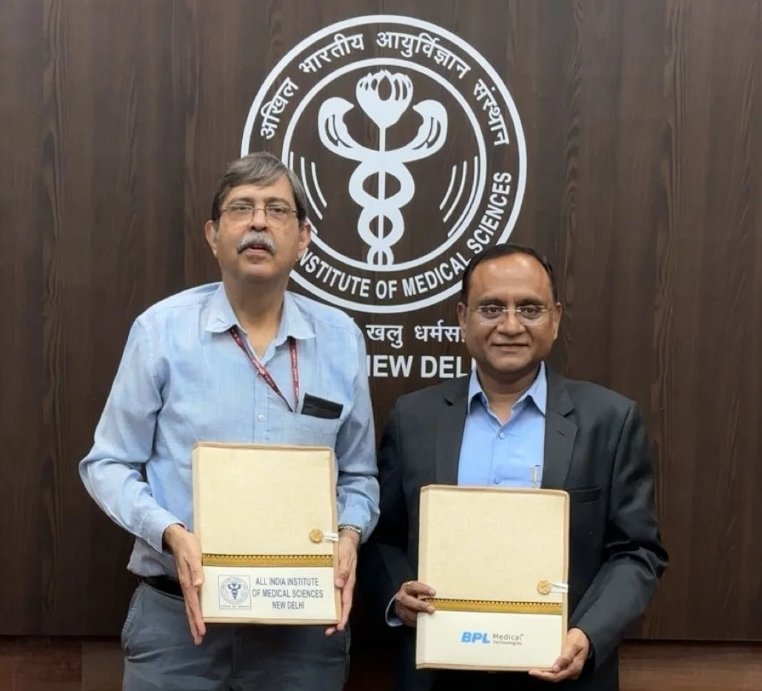
Neurology and rehabilitation: we are studying EASE in post-stroke motor recovery, including a randomised controlled trial with AIIMS New Delhi that uses EEG and fMRI to understand how the brain reorganises during recovery.
Brain health and ageing: with research partners, we are exploring applications in cognitive decline.
Across all three, the brain-data layer matters as much as the stimulation. Every session adds to a growing dataset of Indian brain activity, which helps us understand who responds to treatment and why.
What is the larger vision behind Marbles Health, and what transformation do you ultimately want EASE to bring to mental/neuro healthcare in India?
The two of us met at Plaksha University as fellows of its Tech Leaders Fellowship, and Marbles Health grew out of that.
Today, brain disorders are treated largely with medication. We want neuromodulation to become the second pillar of brain healthcare, standing alongside medicines.
The need is enormous. India has fewer than one psychiatrist for every 100,000 people, and most people living with a mental health condition never receive adequate treatment. A safe, portable treatment that a clinician can prescribe and supervise, in a clinic or at home, can reach far more people than specialist infrastructure alone.
We also want to make brain treatment measurable. Blood tests changed how we manage diabetes; objective brain data can do the same for depression, anxiety and stroke recovery. Over time, that data will let treatment become personalised, with dose and protocol guided by how each patient's brain responds. For us, success is a psychiatrist or neurologist anywhere in India prescribing EASE as routinely as a medicine, and seeing the result on a screen. Built in India, proven in India, and then taken to the world.
How much funding have you raised so far? How is the capital being deployed? Are you expecting to raise more funds in 2027?
Marbles Health is backed by Capital 2B (Info Edge Ventures), Whiteboard Capital, former Novartis leaders and a Government of India grant. We would not like to disclose the amount raised at this stage.
Our capital has gone into three things: building and licensing the EASE platform, with hardware, firmware and software developed in-house; generating clinical evidence through our research collaborations; and building the commercial and patient care teams that support clinics and at-home patients.
Yes, we expect to raise our next round to expand into new conditions and cities, strengthen our clinical evidence base, and take EASE to international markets.
What are the current challenges and opportunities facing the neuro tech market in India?
The challenges are real. Many doctors and patients still do not know that non-invasive brain stimulation is an option. Generating clinical evidence in Indian populations is slow and expensive. Neuromodulation is still rarely taught in medical training. And unlicensed devices sold as wellness products risk undermining trust in the whole category.
The opportunities are larger. The unmet need is vast, and India can generate clinical evidence at a scale and cost few countries can match. The Medical Devices Rules give credible companies a clear regulatory path. India's digital health infrastructure makes remote supervision practical. And a strong domestic manufacturing base means devices can be built at a price Indian patients can afford.
What are your views on the growth of neuro tech startups in India?
We are encouraged. A few years ago, neurotech in India meant mostly academic labs. Today there are startups working on brain stimulation, EEG, brain-computer interfaces and digital therapeutics, supported by both government and private capital.
For the sector to earn lasting trust, it has to be built on clinical evidence and regulatory discipline. Devices that act on the brain are medical devices, and they should be licensed and validated as such. Collaboration between startups, hospitals and regulators will matter as much as capital.
India has real advantages here: deep engineering talent, large and diverse patient populations, and the ability to build products that are affordable at home and competitive abroad. We believe the next globally relevant neurotech companies can come from India.
How is India strengthening neurological research ecosystem with adoption of new technologies? What are the challenges being encountered in this process?
The momentum is real. ICMR, DBT and BIRAC are funding device development and clinical validation, and the Department of Pharmaceuticals now supports clinical studies for medical devices. Institutions such as AIIMS, NIMHANS and IISc are running serious EEG, neuroimaging and neuromodulation research, and clinicians are increasingly open to partnering with startups on trials. Our own studies with leading institutions show what these partnerships make possible.
The main challenges:
- Data: India lacks large, standardised datasets of brain activity in Indian populations; most reference norms come from Western cohorts.
- Time: ethics approvals and recruitment can be slow, especially across multiple sites.
- Translation: there is still a funding gap between a grant-funded study and a commercial product.
- People: we need more clinician-scientists and engineers who can work across neuroscience, medicine and technology.
Shared data standards, faster multi-site approvals and stronger industry-academia partnerships will decide how quickly this research reaches patients.
Vrushti Kothari
vrushti.kothari@mmactiv.com