“Leading pharma companies are diversifying into Europe, emerging markets and global specialty segments while protecting their US position”
October 13, 2026 | Tuesday | Views
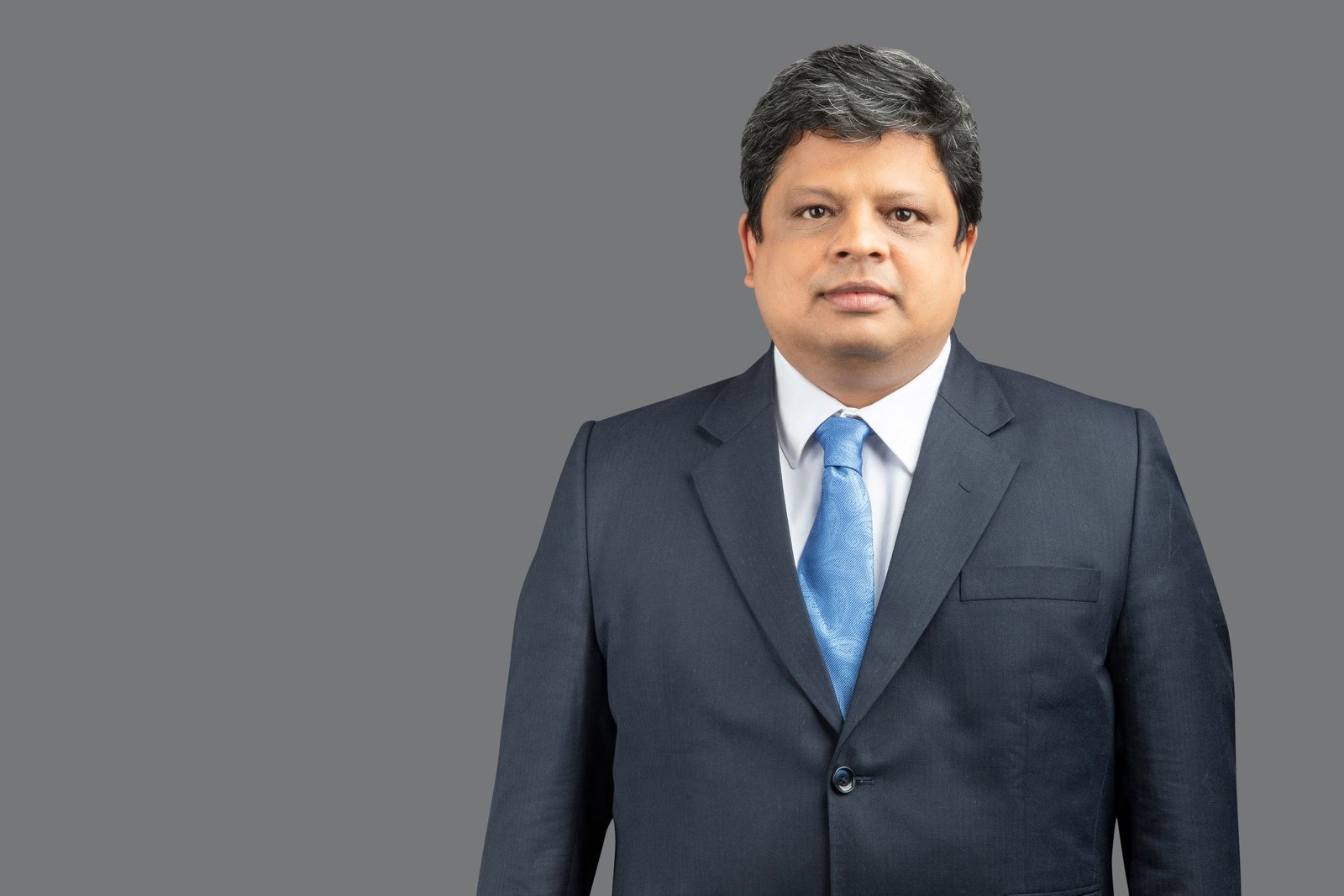
According to reports, India's pharma and healthcare sector held its ground in Q1 2026 with 78 deals worth $1.9 billion, while in Q2 2026, pharma and healthcare deal activity reflected a selective investment environment with strategic acquisitions, portfolio strengthening and capability-led expansion as key themes across the sector. PE and VC hit their highest deal volumes since Q2 2022, with AI diagnostics, digital care, and preventive health attracting the bulk of early-stage bets, even as M&A values softened 40 per cent on the absence of blockbuster transactions. To get a closer look at the pharma M&A scenario, and the future trends, BioSpectrum interacted with Nitin Lath, MD, Corporate Finance, Alvarez & Marsal, India
How would you characterise the current deal environment in Indian pharma? What is driving transactions today: scale, portfolio gaps, new capabilities or access to markets?
Deal activity in Indian pharma is healthy, but the logic behind it has changed. A few years ago, buyers were largely paying for revenue and manufacturing scale. Today they are paying for capability: a complex generics pipeline, a biologics platform, a specialty franchise with strong physician pull, or a foothold in a market that would take a decade to build organically.
Strategic buyers want assets that move them up the value chain faster than internal R&D can. Private equity is running a complementary playbook, building platforms in domestic branded formulations, CDMO and specialty generics, then scaling them through bolt-on acquisitions. Recent domestic transactions such as Torrent's acquisition of JB Chemicals and Mankind's acquisition of Bharat Serums and Vaccines show buyers paying for chronic therapy franchises and specialist portfolios rather than volume.
Which segments in pharma are likely to attract the most investment over the next three to five years, and why?
We see four segments attracting the bulk of capital.
Specialty pharma offers higher margins, fewer competitors and genuine pricing power, which is exactly what traditional generics have lost.
Biologics and biosimilars will benefit as several of the world's largest biologic drugs lose patent protection this decade, and payers look for lower-cost alternatives that do not compromise on quality.
CDMO and CRDMO businesses are gaining from global innovators' push to diversify their supply chains, particularly as scrutiny of China-linked suppliers increases. India's chemistry depth and cost-competitive manufacturing make it a natural beneficiary.
Indian branded formulations remain attractive for their steady, cash-generative growth, driven by rising chronic disease prevalence and deeper penetration into smaller towns. They are insulated from US price erosion, although domestic price controls remain a factor investors need to underwrite.
Are Indian pharma companies moving fast enough beyond traditional generics?
Not uniformly. A handful of leading companies have made serious, sustained investments in specialty products, biosimilars, complex injectables and respiratory therapies, and they are beginning to see returns. Much of the industry, however, still depends heavily on conventional generics, because moving into innovation-led businesses demands significant capital, specialised talent, regulatory depth and a tolerance for long payback periods.
The likely outcome is a widening gap between leaders and the rest. Mid-sized companies will increasingly face a clear choice: specialise in a defensible niche, partner with larger players, or become acquisition targets themselves. That dynamic will be a meaningful source of deal flow in its own right.
What will separate the winners in specialty pharma, biologics and CDMO from the rest?
Three capabilities, and winners will need all three.
The first is scientific and technical differentiation: products and processes that competitors cannot easily replicate. The second is regulatory excellence, particularly in the US and Europe, where a single adverse inspection can erase years of commercial progress. The third is execution with customers, whether that means building deep physician engagement in specialty pharma or earning the trust of global innovators as a long-term CDMO partner.
Scale helps, but it is no longer decisive. In these segments, reliability, quality systems and speed of execution will determine who captures value.
Is innovation genuinely becoming a source of value for Indian pharma companies, or is scale still what investors pay for?
Innovation is becoming a real source of value, but only innovation that shows up in the P&L.
Historically, investors rewarded Indian pharma for manufacturing efficiency, scale and distribution reach. Those attributes still matter, but the highest valuations now go to companies with differentiated technologies, proprietary products, specialised platforms and defensible intellectual property.
Investors have also become sharper at telling the difference between spending on R&D and earning a return on it. A large R&D budget on its own does not command a premium. A track record of turning pipeline assets into profitable, durable revenue does.
The US remains the most important market for many Indian pharma companies. Is that exposure still a strength, or is it becoming a concentration risk?
The US remains a strength, but one that now needs active management. It is the world's largest pharmaceutical market and has driven much of Indian pharma's growth and profitability over two decades. Companies with competitive portfolios and strong compliance records will continue to find substantial opportunity there.
The risks, however, have become more pronounced. Pricing pressure, regulatory inspections, litigation, reimbursement changes and trade policy can each move earnings materially, and they can move together. As a result, leading companies are diversifying into Europe, emerging markets and global specialty segments while protecting their US position. The most resilient portfolios will be those where no single market or policy decision can define the year.
Could greater policy uncertainty in the US push Indian companies to acquire manufacturing or commercial capabilities within the market?
Yes, for larger players with global ambitions.
A US manufacturing or commercial presence can strengthen supply chain resilience, deepen customer relationships, improve regulatory responsiveness and reduce exposure to trade and policy shifts. Zydus's acquisition of US biologics manufacturing facilities from Agenus is an early example of this thinking.
These moves will remain selective. US assets carry significantly higher operating costs, and buyers must be confident that the strategic benefit justifies them. We expect targeted acquisitions of niche manufacturing platforms and specialty commercial infrastructure, rather than a broad wave of US buying.
For Indian pharma companies seeking international growth, when does an acquisition make more strategic sense than licensing, a joint venture or a commercial partnership?
The simplest test is this: buy what is core and hard to build, partner for what is optional or unproven.
An acquisition makes sense when a company needs control over a critical capability, wants to enter a market quickly, or needs assets that would take years to build organically. A specialised manufacturing facility, an established product portfolio or a ready commercial platform can compress years of effort into a single transaction.
Licensing, joint ventures and partnerships work better when the goal is to test a market, share risk, preserve capital or access a specific technology without owning it. Often the right sequence is to partner first and acquire later, once the opportunity has proven itself.