Throat Cancer Is Not Just a Smoker’s Disease: What You Need to Know About HPV
October 16, 2026 | Friday | Reports/white papers
You've never smoked a cigarette. You don't chew tobacco either. So when a sore throat refuses to go away or a painless lump appears on your neck, cancer probably isn't the first thing that crosses your mind.
And that's understandable. For years, throat cancer has been closely associated with smoking and tobacco consumption.
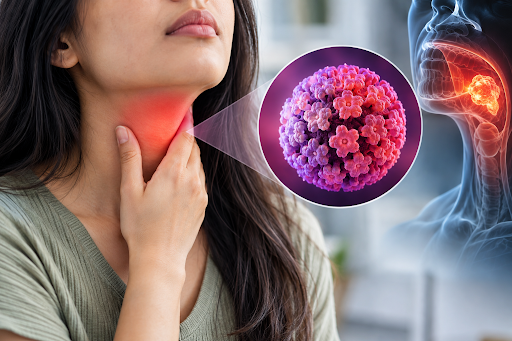
But there's another risk factor that many people haven't heard much about: human papillomavirus, better known as HPV.
Understanding this connection, along with the early throat cancer symptoms, matters even if you've never used tobacco.
Why Is Throat Cancer Rising Among People Who Don’t Smoke?
Smoking and alcohol remain important causes of head and neck cancers. However, doctors are increasingly recognising cancers linked to HPV, particularly those affecting the tonsils and the base of the tongue.
This type of cancer is called oropharyngeal cancer, which develops in the middle part of the throat.
HPV-related oropharyngeal cancer rates have increased in countries such as the United States, including among people who don't smoke. The pattern varies across countries, and tobacco continues to play a major role in India's cancer burden.
The key message? Not smoking reduces your cancer risk, but it doesn't eliminate it.
What Is the HPV Link to Throat Cancer?
HPV is a common virus that can spread through intimate skin-to-skin contact, including sexual contact. Many people are exposed to it without ever knowing.
In most cases, the immune system clears the infection naturally within a year or two. It causes no lasting health problems.
However, certain high-risk types of HPV can sometimes remain in the body for years. A small proportion of these persistent infections may eventually lead to cancer.
HPV type 16 is particularly associated with cancers of the tonsils and the base of the tongue.
It's important to understand that having HPV doesn't mean you have cancer or will develop it. When cancer does develop, it usually happens many years after the original infection.
Throat Cancer Symptoms You Should Not Ignore
Most throat problems are caused by common infections, allergies or acidity. But some throat cancer symptoms can look remarkably similar in the beginning.
Here are six changes worth paying attention to.
1. A Sore Throat That Doesn't Go Away
A sore throat usually improves within several days. But if it continues for weeks, particularly without fever or other signs of infection, it deserves attention.
It's easy to keep blaming the weather, pollution or a stubborn cold.
2. A Painless Lump in the Neck
This can be an important warning sign of HPV-related throat cancer.
A swollen lymph node may appear on one side of the neck, sometimes without any throat discomfort at all. Although infections commonly cause swollen glands, a lump that persists or grows needs examination.
3. Difficulty or Pain While Swallowing
Does swallowing feel uncomfortable? Does food sometimes seem to get stuck?
People often assume it's acidity, tonsillitis or a minor throat infection. Persistent swallowing difficulties shouldn't be dismissed.
4. Ear Pain Without an Ear Infection
This one surprises many people.
Pain originating in the throat can sometimes be felt in the ear because of shared nerve pathways. Ongoing pain in one ear, particularly when the ear examination is normal, may need further investigation.
5. A Persistent Change in Your Voice
Hoarseness after a cold or a long day of speaking is common.
However, a voice change that lasts more than a few weeks should be examined. It can have several causes, including conditions affecting the voice box.
6. Unexplained Weight Loss
Losing weight without changing your diet or exercise routine can signal an underlying health problem.
When weight loss occurs alongside persistent throat discomfort, swallowing difficulties or a neck lump, it's important to consult a doctor.
Remember: These symptoms don't automatically indicate cancer. It's their persistence, progression or combination that makes medical evaluation important.
Who Is at Risk Besides Smokers?
You don't need a history of cigarette smoking to develop throat cancer.
Several factors can influence your risk:
- HPV infection: Persistent infection with certain high-risk HPV types can increase the likelihood of oropharyngeal cancer.
- Smokeless tobacco: Gutkha, khaini and other tobacco products can increase the risk of cancers in the mouth and throat.
- Alcohol consumption: Regular heavy drinking raises the risk, particularly when combined with tobacco use.
- Weakened immunity: People whose immune systems cannot clear HPV effectively may face a higher risk of HPV-related disease.
An HPV infection can occur in people from different backgrounds and age groups. It isn't a reflection of someone's lifestyle or character.
Throat Cancer Diagnosis: What Tests May Be Recommended?
Finding a persistent symptom doesn't mean you'll immediately need multiple scans.
Your doctor will usually begin with a straightforward examination.
Step 1: Clinical examination
An ENT specialist or head and neck specialist examines your mouth, throat and neck, checking for unusual swelling or visible changes.
Step 2: Endoscopic examination
A thin, flexible camera may be used to examine areas of the throat that aren't easily visible during a routine check-up.
Step 3: Biopsy
If a suspicious area is identified, a small tissue sample may be taken for laboratory testing. A biopsy helps confirm whether cancer is present. HPV-related testing may also be performed on the tumour tissue.
Step 4: Imaging tests
CT, MRI or PET-CT scans may be recommended to assess the location and extent of a confirmed or suspected cancer.
Not everyone needs every investigation. Your doctor will decide based on the findings.
Throat Cancer Treatment at a Cancer Hospital in Kolhapur: What to Expect
If throat cancer is diagnosed, the next question is usually, "What happens now?"
Treatment depends on where the cancer began, its stage, whether it is HPV-related and your overall health.
Your oncology team may recommend:
- Surgery: To remove the tumour and, in selected cases, affected lymph nodes.
- Radiotherapy: Precisely directed radiation to treat cancer cells.
- Chemotherapy: Medicines used alone or alongside radiotherapy, depending on the treatment plan.
- Targeted therapy: Medicines that act on specific pathways involved in cancer growth.
- Immunotherapy: Treatment that helps the immune system attack cancer, generally used in selected clinical situations.
Not every patient requires all these treatments. Some early-stage cancers can be treated with surgery or radiotherapy alone, while others need a combination.
When comparing a cancer hospital in Kolhapur with specialist cancer centres in nearby cities, look for experienced head and neck cancer specialists, coordinated treatment planning and access to appropriate diagnostic facilities.
Patients from Kolhapur and surrounding areas can also contact Onco-Life Cancer Centre, Satara, to enquire about specialist consultation and the appropriate next steps.
Reducing Your Risk and Knowing When to Get Checked
You cannot prevent every case of throat cancer, but you can take sensible steps to reduce your risk.
- Speak to your doctor about HPV vaccination and whether it is appropriate for your age.
- Avoid cigarettes, gutkha, khaini and other tobacco products.
- Limit alcohol consumption.
- Practise safer sex to help reduce the risk of HPV transmission.
- Get a persistent sore throat, neck lump or swallowing difficulty examined rather than repeatedly self-medicating.
There is currently no standard screening test for HPV-related throat cancer in people without symptoms.
And one final thing worth remembering: You don't have to smoke to develop throat cancer, and you don't have to panic over every sore throat.
What matters is recognising when something isn't getting better and taking the next step towards finding out why.