The largest part of the Indian pharma market is innovative products: Dilip Shanghvi
October 08, 2026 | Thursday | News
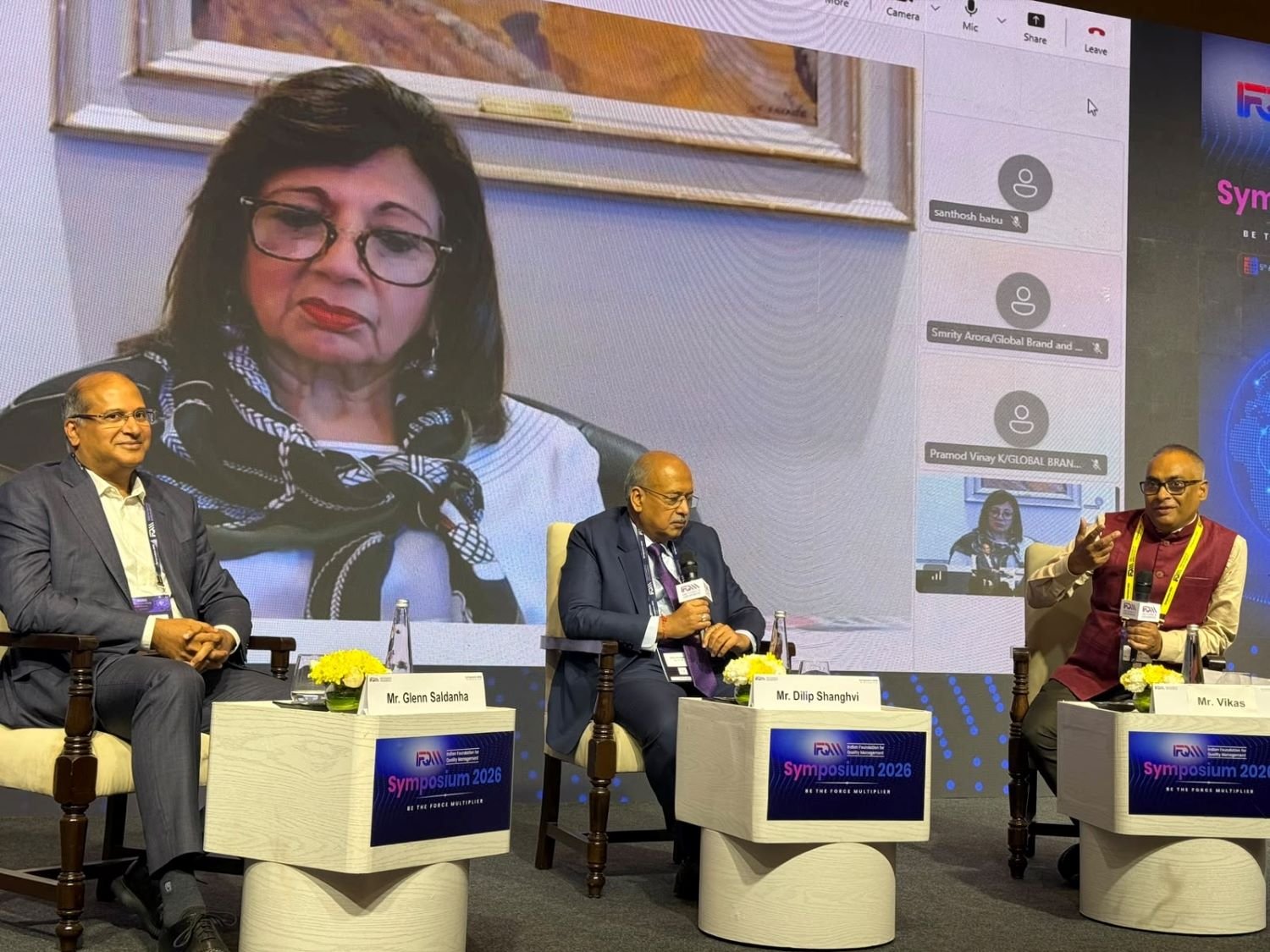
Dilip Shanghvi, Executive Chairman, Sun Pharma joined industry experts during a Pharma & Life Sciences-based panel discussion
During a panel discussion titled ‘Pharma & Life Sciences: Moving Beyond Generics—Pioneering Global Leadership in Innovative Medicine’, held at the IFQM SYMPOSIUM 2026 in New Delhi recently, Dilip Shanghvi, Executive Chairman, Sun Pharma highlighted the growth of the Indian pharma industry stating, “We are at a stage where Indian industry has reached a size where we can invest in innovation and also, we have now developed capability to launch these products globally. If you look at the industry from size point of view, even though generics constitute the largest volume, they're still less than nearly close to 20 percent of the pharma market. The largest part of the market is innovative products. And if we have to succeed and become big globally, then the focus on innovation will help us reach here.”
Shanghvi also said that Indian CEOs and promoters should become a little bit more confident on their own ability and invest in innovation, because the investment in innovation will produce return only after a few years.
Emphasising on the pharma quality aspect, Shanghvi said,” I think the emphasis on quality and consistency and delivery is very different in other businesses as compared to pharma. But it's necessary for us to learn and adopt, because what works for others, will not directly work for us, but we can adopt and learn.”
Sharing his perspective on pharma innovation, Glenn Saldanha, Chairman & Managing Director, Glenmark Pharma, another key speaker in the panel discussion, said “There are a bunch of leading companies in India who are continuing to invest in innovation and are doing a great job. But I think the next decade is very important for India to move from being the pharmacy of the world in terms of generic medicines to becoming an innovation led country. China has done it very successfully, and now it's India's turn to go through that journey.”
He further added that while most of the western world has a reimbursement system for life-saving products, India does not have it. “The hope is that we build a government reimbursed programme especially for life-saving products or diseases with large unmet medical needs which will really incentivise Indian companies to actually go after those specific products and it will help patients and help the overall economics of being innovative.”
Joining the panel discussion virtually, Dr Kiran Mazumdar Shaw, Executive Chairperson, Biocon and Syngene International, pointed out, “I am very optimistic that given the talent, given the kind of capabilities that we have to take innovation from the lab to the clinic and into the market, we should not lose this opportunity. Because genetics is a great success story for India, we need to follow this with innovation and an innovation-led strategy.”
She also mentioned, “For drug innovation, no company can do it alone. You need to outsource a lot of things that go into the process of drug innovation, and this can lead to a larger ecosystem and a larger economic gain for the country.”
“I think IFQM is playing a very important role in ensuring that whatever we do in terms of steering our innovation-led path is done with quality at the centre”, Dr Kiran concluded.
The Indian Foundation for Quality Management (IFQM), established by a consortium of India's leading enterprises, hosted the third edition of its annual two-day IFQM Symposium, focusing on how Quality & Innovation can make India globally competitive. The event was held in New Delhi on October 5 & 6, 2026, under the central theme "Quality, Innovation and Excellence as India's Force Multiplier".