India–EU Free Trade Agreement marks breakthrough in India’s global trade engagement
January 27, 2026 | Tuesday | News
FTA will open new opportunities for MSMEs and create jobs for women
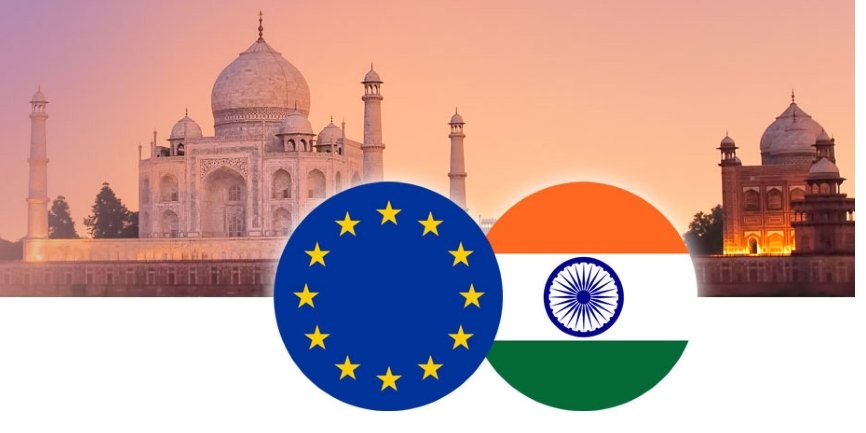
Prime Minister Narendra Modi and European Commission President Ursula von der Leyen, have jointly announced the conclusion of the India–European Union Free Trade Agreement (India–EU FTA) at the 16th India–EU Summit, held during the visit of the European leaders to India. This announcement marks a historic milestone in India–EU economic relations and trade engagement with key global partners.
The European Union is India’s one of the largest trading partner, with bilateral trade in goods and services growing steadily over the years. In 2024–25, India’s bilateral trade in goods with the EU stood at Rs 11.5 Lakh Crore ($136.54 billion) with exports worth Rs 6.4 Lakh Crore ($75.85 billion) and imports amounting to $5.1 Lakh Crore ($60.68 billion). India-EU trade in services reached Rs 7.2 Lakh Crore ($83.10 billion) in 2024.
India has also secured access for practitioners of Indian Traditional Medicine to work under home title in EU Member States where traditional medical practices are not regulated.
From the medtech perspective, Pavan Choudary, Chairman, Medical Technology Association of India (MTaI), said, “We congratulate India and the European Union on concluding this landmark agreement, which is expected to open a new chapter in healthcare cooperation - where success will be measured not only in GDP, but in lives improved and saved. If the fine print is in line with the announcements made, this FTA will enable India to strengthen its role as a reliable, innovation-driven partner by expanding exports of medical textiles, surgical instruments and disposables which India specialises in. European companies in India are hoping to benefit from lower duties, stronger participation in public procurement, and greater incentives for local manufacturing and R&D. Most importantly for patients, any eventual tariff reductions on medical devices should help improve affordability and access to advanced therapies, making this agreement a potential example of how ethical and equitable trade can reinforce health systems on both sides.”
“The proposed reduction in EU tariffs on industrial and medical equipment is a significant and timely step that can accelerate the global competitiveness of Indian MedTech innovation. For companies like SS Innovations, which are developing advanced, Made-in-India surgical robotic systems, lower tariff barriers open new opportunities to scale exports, improve price competitiveness, and strengthen India’s position as a trusted global manufacturing hub. This policy move not only supports trade efficiency but also reinforces the growing acceptance of high-quality Indian medical technologies in regulated international markets such as the EU”, said Dr. Vishwa Srivastava, CEO - APAC, SS Innovations International Inc.
Adding another perspective, Suresh Nair, Partner, Indirect Tax, EY India said, "The India–EU Free Trade Agreement provides substantial benefits for the pharmaceutical and medical devices sectors, subject to phased implementation and final ratification details. The EU will eliminate tariffs of up to 11% on pharmaceuticals and reduce tariffs on approximately 90% of medical devices from up to 27.5% to zero. The agreement strengthens regulatory cooperation, simplifies compliance procedures, and enhances intellectual property protections, improving the competitiveness of Indian exporters in this sector."
“The value of the India–EU trade deal extends far beyond headline tariff reductions. India’s pharmaceutical exports to Europe currently account for just 19% of total exports, underscoring the scale of opportunity ahead rather than any structural constraint. For those of us in preventive healthcare, the gains from this deal go far beyond export volumes. Europe’s regulatory depth and science-led approach will facilitate stronger clinical validation, better traceability, and higher compliance standards in India. That discipline will ultimately build consumer trust in nutraceuticals, not only in Europe but across the globe. At the same time, Europe’s ageing population and focus on wellness align naturally with India’s ayurveda knowledge, strengths in nutrition science, and cost-efficient advanced manufacturing. This is how India moves from being a supplier to becoming a global health partner", said Sanjaya Mariwala, Executive Chairman and Managing Director of OmniActive Health Technologies.
Further, the FTA is expected to facilitate cooperation in critical areas like Artificial Intelligence, clean technologies, and semiconductors, supporting India's technological advancement.