AMTZ expands additive manufacturing CoE to boost India’s MedTech sector
January 29, 2026 | Thursday | News
The Centre has worked with over 20 startups and 35 industry partners
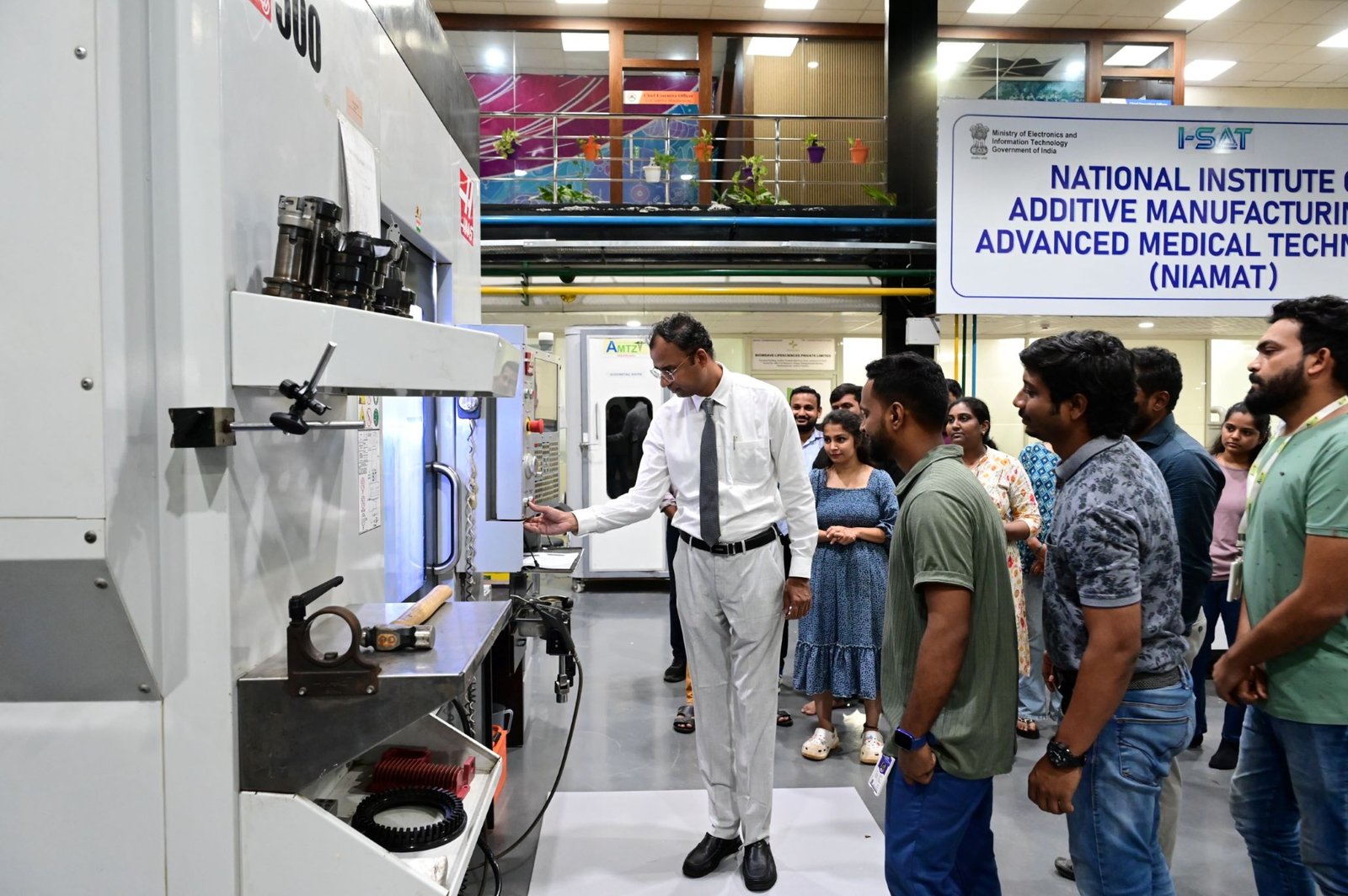
Strengthening India’s journey towards self-reliance in medical device manufacturing, the Advanced Additive Manufacturing Centre of Excellence (CoE) at Andhra Pradesh MedTech Zone (AMTZ) is set to expand its advanced manufacturing capabilities across plastics, metals and silicone-based medical components.
The expansion builds on the Centre’s proven success in polymer and metal additive manufacturing, CNC precision machining and pilot-scale production, positioning AMTZ as a key enabler of high-precision, export-ready MedTech manufacturing in the country.
To date, the facility has worked with over 20 startups and more than 35 industry partners, providing end-to-end support ranging from industrial design and rapid prototyping to machining, post-processing and low-volume production.
Commenting on this integrated approach, Dr Jitendra Sharma, Founder CEO and Managing Director, Andhra Pradesh Medtech Zone said, “By combining additive manufacturing with precision machining, injection-moulded plastics, silicone component manufacturing, and advanced post-processing capabilities, the Centre of Excellence at AMTZ has created a strong platform for indigenous, scalable, and globally competitive medical device component production. This integrated model reduces import dependence, shortens manufacturing cycles, and accelerates innovation and commercialisation for the MedTech sector.”
Aligned with national initiatives such as Make in India and Atmanirbhar Bharat, the Centre of Excellence is playing a pivotal role in strengthening domestic manufacturing while supporting export-oriented production. Its shared-access model lowers entry barriers for innovators and manufacturers, enabling them to leverage world-class facilities without heavy capital investment, while simultaneously addressing quality, scale and compliance requirements demanded by global markets.
The Centre enabled the development of a manufacturing process for ultra-high molecular weight polyethylene (UHMWPE), a critical material used in joint replacements and orthopedic implants. This effort helped Nanoshel break a global supply duopoly and provide a domestic alternative, significantly reducing India’s dependence on imports estimated at nearly Rs 2,000 crore.
Looking ahead, AMTZ plans to increase collaborations beyond current industry partners and continue building a skilled workforce in advanced manufacturing technologies. With this expansion, the Centre of Excellence is poised to play a defining role in positioning India as a global hub for medical device component manufacturing.