Can India accelerate ocular healthcare with AI?
November 01, 2026 | Sunday | Features | By Vrushti Kothari
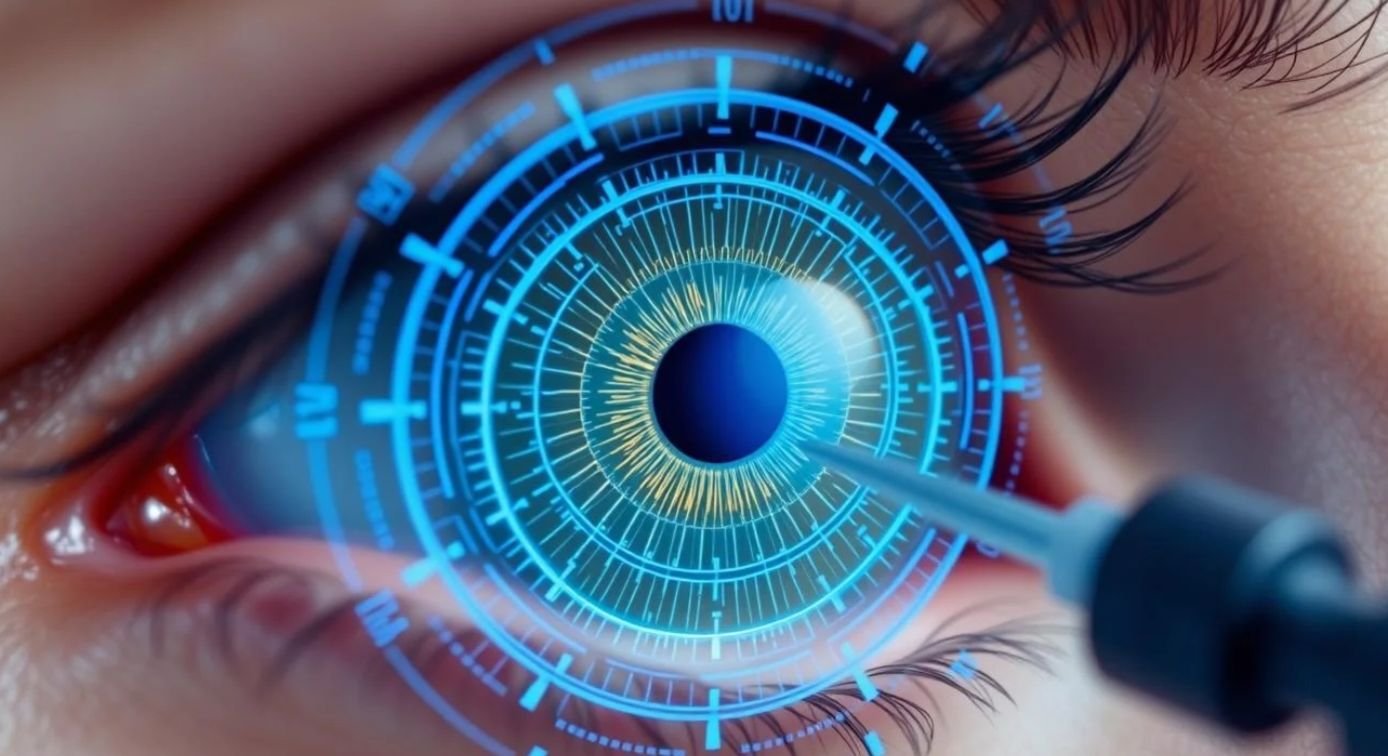
Globally, at least 2.2 billion people have a vision impairment or blindness, of whom at least 1 billion have a vision impairment that could have been prevented or has yet to be addressed. According to ‘2030 In Sight’ initiative by the International Agency for the Prevention of Blindness (IAPB), there is an urgent need of inclusion of ocular healthcare i.e. prevention, diagnosis, and treatment of eye diseases and conditions, in national health strategic plans, along with integration of new technologies such as artificial intelligence (AI). Let’s dig deeper into this aspect and analyse how India is building a roadmap in this direction.
image credit- freepik
As per reports, glaucoma has emerged as a major public health challenge in India, currently affecting over 12 million people, most of whom remain undiagnosed. By 2030, this number is projected to rise by 20–25 per cent, reaching 15–16 million cases. Besides glaucoma, the other major eye healthcare conditions that are prevalent in the country include diabetic retinopathy, corneal blindness, cataract, age-related macular degeneration, and much more.
To address this growing burden, experts are of the opinion that India needs a national registry of common eye diseases, which can function as an integrated, outcome-oriented, equity-sensitive, and actionable eye health information system, similar to those in many developed countries. On the other hand, doctors across the country are now insisting on raising awareness about the importance of eye health through public campaigns, and encourage people to seek regular eye examinations.
During an event on World Sight Day, on October 8, Dr Apoorv Grover, Consultant, Vitreo-Retina and Uvea at Vision Eye Centre spoke at length about a preventable but widely ignored cause of blindness in India i.e. diabetic retinopathy. According to Dr Grover, the real gap is that too many people only think about their eyes after their vision has already started to fail, by which point treatment becomes more complex and outcomes are harder to guarantee.
As a result, we are witnessing the growing integration of new technologies such as AI into diagnostic devices and medical equipment being developed by the innovators in the country, for early detection and management of eye diseases.
For instance, MadhuNetrAI has emerged as a significant indigenous innovation for large-scale screening of diabetic retinopathy in India. Developed through a collaborative effort between the Dr Rajendra Prasad Centre for Ophthalmic Sciences (AIIMS), the Union Health Ministry, and Wadhwani AI, the platform represents one of the first fully validated, India-specific AI tool designed for automated detection and grading of diabetic eye disease. Researchers at AIIMS have also developed an AI-based software for early detection of glaucoma.
Further, ZEISS India has launched a strategic collaboration with the Indian Institute of Science (IISc), Bengaluru to advance research in AI applications for eye care. This initiative includes the establishment of a research facility at IISc, supported by the Spectrum Lab within the Department of Electrical Engineering. The facility aims to develop AI-based solutions that enhance diagnostic accuracy and improve patient outcomes in ophthalmology.
Likewise, Bengaluru-based medtech company Remidio has developed Neubo 130, a next-generation ultra-widefield neonatal retinal imaging system designed to enhance precision diagnostics for neonatal retinal conditions like Retinopathy of Prematurity (ROP), utilising AI.
The company has also recently received approval from the Karnataka State FDA, for its Medios HI (Humanising Intelligence) Glaucoma AI and Medios HI AMD AI devices, to enable early detection of glaucoma and age-related macular degeneration (AMD) in diverse healthcare settings.
Another major player from Bengaluru, i.e. Forus Health, has received regulatory approval from the Central Drugs Standard Control Organisation (CDSCO) for its FH-POISE DRT device. It is an AI-powered retinal image analysis platform designed to support the detection and screening of ocular and systemic diseases using state-of-the-art algorithms. The company has further launched a portable Digital Eye Clinic that enables healthcare providers to deliver comprehensive eye examinations beyond conventional hospital settings.
Sharing his perspective, Dr Ajay Sharma, Founder and Chief Medical Director, Eye-Q Hospital said, “As the prevalence of vision-related conditions continues to rise, hospitals have an important role to play in evaluating, validating and integrating emerging technologies into routine clinical practice. The growing application of AI and digital tools in ophthalmology can further strengthen early detection, improve workflow efficiency and enable more personalised approaches to patient care. However, technology-led advancement must go hand in hand with greater accessibility. Public-private partnerships can play a significant role in addressing infrastructure and access gaps by bringing together the reach of government healthcare systems and the clinical expertise, technology and operational capabilities of private healthcare providers.”
Technology & Accessibility Gap?
While AI-based digital tools are showing promise for early detection and management of various eye diseases, the industry and government must invest in upskilling the doctors to use these tools, and to make them accessible to even remote areas.
Earlier this year, the government launched an online AI training programme aimed at equipping nearly 50,000 doctors with a foundational understanding of AI and its applications in healthcare. This initiative, developed by the National Board of Examinations in Medical Sciences, is part of a broader effort to integrate AI into healthcare delivery and medical education. The programme focuses on practical AI applications, such as screening diabetic retinopathy, amongst others. Likewise, Apollo University has introduced an industry-focused course in AI & Healthcare Technology to prepare students for careers at the intersection of AI and modern healthcare.
Another example is the recent launch of the Orbis Digital Training Hub at Sankara Eye Hospital in Bengaluru to provide high-quality training and improve the skills of the eye care workforce across the country, by integrating advanced digital simulation and ophthalmic training facilities.
“Technology is playing an increasingly important role in making eye care more accessible,
especially in underserved areas. At Orbis, we have seen how digital tools can help bridge gaps in access to expertise and training. AI is becoming a useful clinical tool for early detection, with AI- enabled systems able to analyse retinal images and identify conditions such as diabetic retinopathy. Our Digital Training Hubs combine simulation, virtual reality, telemedicine and hands-on training to strengthen the skills of eye care professionals”, said Dr Rishi Raj Borah, Country Director, Orbis India.
From an industry perspective, there is a necessity for more investments to be made in the areas of technology-enabled diagnostics, clinical infrastructure and skilled manpower in the ophthalmic field, while quality eye care provision should expand from big cities to rural areas. “The role of tele-ophthalmology, AI-assisted screening and digital healthcare records allows for the distribution of speciality expertise to rural communities. However, those technologies should only be used to complement professional expertise, but not completely substitute it. The government can be of significant help in terms of enhancing eye care infrastructure at the basic and district level of healthcare, improving the path for screening and referrals, arranging training for ophthalmologists and ophthalmic care personnel, and increasing affordability and accessibility of eye care services. In conclusion, the priority must be to build a fully integrated eye-care system”, concluded Deepshikha Sharma, Chief Executive Officer, Sharp Sight Eye Hospitals.
Vrushti Kothari
(vrushti.kothari@mmactiv.com)