India Inching Towards API Self-Reliance
May 01, 2026 | Friday | Features | By Sanjiv Das
The pharmaceutical industry’s tryst with active pharmaceutical ingredients (APIs) is both strategic and structural. As the “Pharmacy of the World,” India’s global leadership in generic drug manufacturing rests fundamentally on its access to, and control over, APIs. These biologically active components form the backbone of all medicines, enabling the production of formulations such as tablets, capsules, and injectables that drive healthcare delivery across geographies. Over the past decade, India’s growing dependence on imported APIs, particularly for critical and high-volume drugs, has exposed structural vulnerabilities in the pharmaceutical ecosystem. Disruptions during COVID-19 underscored the risks of over-reliance on external sources, prompting policymakers and industry leaders to reassess the country’s API strategy. Let's dig deeper.
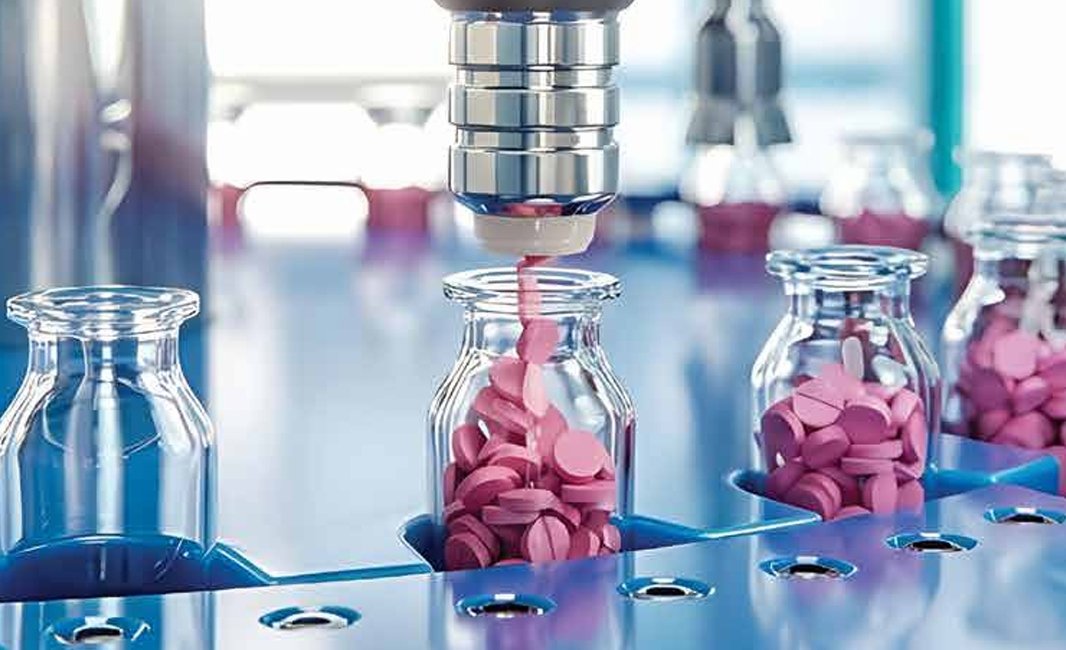
image credit- shutterstock
Across the five-year span from 2020–21 to 2024–25, India’s import trends for Active Pharmaceutical Ingredients (APIs), key starting materials (KSMs), and drug intermediates reveal a layered shift marked by rapid demand expansion, continued reliance on external sources, and the gradual emergence of domestic manufacturing capacity.
Although India is widely known as the “pharmacy of the world” and holds a strong global position in finished formulations, this advantage still depends significantly on imported bulk drugs and intermediates. This structural reliance is most evident in imports from China, which continues to be the leading supplier across many critical segments, even as policy measures like the Production Linked Incentive (PLI) Scheme for Bulk Drugs and the Scheme for Promotion of Bulk Drug Parks seek to address long-standing supply-side challenges.
Launched in FY 2022–23 with an outlay of Rs 6,940 crore, the PLI scheme represents a strategic shift in India’s pharmaceutical industrial policy. It is not limited to capacity expansion but is explicitly designed to move the industry toward high-value, technology-intensive production. This includes biopharmaceuticals, complex generic formulations, patented or near-patent-expiry medicines, and specialised therapies such as anti-cancer and auto-immune drugs. The objective is to reduce import dependence while simultaneously upgrading India’s position in the global pharmaceutical value chain.
The strong industry response—33 out of 41 products subscribed, 48 greenfield projects approved, and actual investment rising to Rs 4,814.1 crore against a committed Rs 4,329.95 crore—indicates that firms are increasingly aligning with this policy direction. The commissioning of 38 projects covering 28 APIs and the creation of around 56,800 metric tonnes per annum of domestic capacity marks an important but still initial stage of structural transformation.
Complementing this, the Scheme for Promotion of Bulk Drug Parks with a budgetary outlay of Rs 3,000 crore addresses infrastructure bottlenecks that have historically constrained cost-competitive API manufacturing in India. With total project costs exceeding Rs 6,306.68 crore, the scheme supports the development of large integrated industrial clusters in Andhra Pradesh, Gujarat, and Himachal Pradesh. These parks are designed to provide shared infrastructure such as power, water, steam, effluent treatment plants, solid waste management systems, and warehousing facilities at subsidised rates. This reduces production costs and encourages economies of scale, which are essential in a sector where China has traditionally maintained dominance through large integrated chemical ecosystems.
The Gujarat Park at Jambusar (over 2,000 acres) is the most advanced, with substantial infrastructure already under development, while Himachal Pradesh’s Una Park—projected to generate up to 20,000 jobs and attract Rs 8,000–10,000 crore in investment—is positioned to strengthen the existing pharmaceutical cluster in Baddi. The Andhra Pradesh park at Nakkapalli is progressing through land acquisition and preparatory stages, reflecting adaptive planning to improve logistics efficiency.
Despite these policy efforts, import data reveals that structural dependence remains deeply entrenched. Imports from China increased from Rs 18,646 crore in 2020–21 to Rs 27,032 crore in 2024–25, a rise of about 45 per cent, making it by far the largest supplier of APIs and intermediates to India. This dependence is not uniform but highly concentrated in critical product categories.
According to the Directorate General of Commercial Intelligence and Statistics (DGCI&S), data for FY 2024–25, India exhibits near-complete (100 per cent) import dependence on China for roughly 25–35 key HS-coded pharmaceutical inputs. These include essential intermediates such as antibiotic building blocks, anti-infective compounds, vitamin intermediates, and fine chemical derivatives.
Specific examples include rifampicin intermediates, methyl dopa, cysteine hydrochloride, sulphadimidine, sulphamide, penicillin and cephalosporin intermediates (including 6-APA derivatives), barbituric acid derivatives, and pyridine-based compounds. Collectively, these fully import-dependent APIs account for several hundred million US dollars annually, indicating that dependence is not limited to low-value chemicals but extends deep into essential and high-volume therapeutic supply chains.
This persistent dependence highlights several structural weaknesses in India’s pharmaceutical manufacturing ecosystem. The first is the limited upstream chemical base, particularly in fermentation-based products and complex intermediates, where India lacks integrated large-scale production systems.
China, in contrast, benefits from vertically integrated clusters that combine chemical manufacturing, intermediates, and APIs within the same ecosystem. The second weakness is cost competitiveness; Indian manufacturers often face higher input, energy, compliance, and environmental costs, making domestic production less competitive than imports.
Third, the sector suffers from fragmented scale, with fewer large integrated API producers and continued reliance on imported key starting materials, which prevents full backward integration. Fourth, despite policy incentives such as PLI, the pace of capacity creation remains gradual, meaning substitution of high-dependence APIs is still limited. Finally, diversification constraints persist because many of these critical APIs have very few global producers, limiting alternative sourcing options beyond China in the short to medium term.
Against this backdrop, imports from other major suppliers show more nuanced but limited diversification trends. Imports from the United States declined sharply from Rs 1,235 crore in 2020–21 to Rs 691 crore in 2024–25, a contraction of about 44 per cent, reflecting a structural reduction in sourcing from higher-cost origins. Italy, in contrast, has emerged as a steadily growing supplier, with imports rising from Rs 803 crore to Rs 1,089 crore (about 36 per cent growth), indicating stronger engagement in high-quality and specialised intermediates.
Singapore shows moderate but fluctuating growth from Rs 790 crore to Rs 917 crore (around 16 per cent growth), reflecting its role as a trading and re-export hub rather than a core manufacturing base. Japan has maintained stable growth from Rs 547 crore to Rs 650 crore (about 19 per cent), suggesting a niche role in supplying technologically advanced and high-value inputs. Together, these trends show incremental diversification but not a structural shift away from China’s dominance.
From a macroeconomic and industrial perspective, the combined impact of policy interventions is beginning to show early results. The PLI scheme has generated cumulative sales of Rs 2,720 crore, including exports of Rs 527.96 crore, indicating that domestic production is beginning to integrate into global supply chains. Import substitution of about Rs 2,192.04 crore also signals early progress in reducing dependence. Employment generation of 4,896 persons further reflects the scheme’s industrial impact, although full-scale employment effects will emerge only as projects mature.
Overall, India’s total imports of APIs, KSMs, and drug intermediates rose from Rs 27,361 crore in 2020–21 to Rs 36,124 crore in 2024–25, an increase of about 32 per cent. This reflects strong underlying demand growth in pharmaceuticals, driven by both domestic consumption and export-oriented formulation manufacturing. However, within this expansion lies a dual reality. On one hand, import dependence—especially on China—remains extremely high and concentrated, with even 100 per cent dependence across several critical APIs. On the other hand, structured policy interventions such as the PLI scheme and bulk drug parks are gradually building the foundation for domestic capacity creation, cost reduction, and supply chain resilience.
India’s pharmaceutical API sector remains highly concentrated and structurally vulnerable due to deep dependence on China for a wide range of essential inputs. This dependence is reinforced by upstream chemical gaps, cost disadvantages, fragmented production scale, and limited global sourcing alternatives. While policy initiatives have begun addressing these issues, the transition toward self-reliance is a long-term industrial transformation rather than a short-term trade adjustment. Achieving meaningful resilience will require sustained investment in integrated chemical infrastructure, scaling of domestic API production, and deeper diversification of global supply chains, alongside continued policy support to bridge the gap between domestic capability and global competitiveness.
Move in a right direction, not a complete solution
The PLI scheme for bulk drugs has emerged as one of the most significant industrial policy interventions in India’s pharmaceutical sector in recent decades. It has triggered a meaningful expansion in domestic manufacturing capacity for APIs, marking what industry leaders widely described as a structural shift rather than a marginal or incremental improvement. However, there is a clear and consistent view across stakeholders that capacity creation alone does not translate into true self-reliance. The real measure of success will depend on whether this capacity is efficiently utilised to deliver uninterrupted, cost-competitive, and export-quality supply at a global scale.
At the centre of this transition, BG Barve, Joint Managing Director, Blue Cross Laboratories; Executive Committee Member, Indian Drug Manufacturers Association (IDMA); Chairman, Taxation Committee, IDMA, emphasises that the PLI scheme has certainly helped revive confidence in domestic API manufacturing and encouraged fresh investment. However, he cautions that the scheme should be seen as an enabling catalyst rather than a standalone solution. According to him, India’s most pressing structural challenge remains its deep dependence on imports for upstream inputs, particularly KSMs, intermediates, and solvents, where nearly 60–70 per cent is still sourced from China. He explains that this creates a situation where India may manufacture APIs domestically, but remains externally dependent for critical inputs that determine both cost and continuity. In his view, unless India builds a strong upstream chemical ecosystem, the gains from API expansion will remain incomplete and vulnerable to external shocks.
This structural concern is further reinforced by Kiran Mazumdar-Shaw, Executive Chairperson, Biocon Limited, who places India’s challenge within the broader global pharmaceutical manufacturing architecture. She acknowledges that the PLI scheme has played an important role in improving the economic viability of capital-intensive API and fermentation-based manufacturing in India, which historically struggled with cost disadvantages. However, she points out that India still relies heavily on China for critical intermediates, with dependence levels estimated at 65–70 per cent in several categories. She elaborates that China’s strength is not just in lower costs but in its integrated industrial ecosystem, where chemical clusters allow seamless coordination between upstream and downstream players. These clusters generate cost efficiencies of 15–20 per cent through shared infrastructure, logistics integration, and scale advantages. She argues that India cannot replicate this model quickly unless it moves decisively toward backward integration, supported by targeted incentives for KSM manufacturing, affordable long-term financing, shared industrial utilities, and sustained R&D investments aimed at innovation-led manufacturing.
While policy intent is strong, implementation realities reveal a more complex picture. According to Pritesh Rathi, Assistant Director, CareEdge Ratings, the PLI scheme has delivered tangible but uneven outcomes. He notes that as of December 2025, 38 projects covering 28 notified products have been successfully commissioned, reflecting meaningful progress in expanding domestic capacity. However, he also highlights that a number of approved projects are facing delays due to infrastructure readiness issues, financing constraints, and regulatory clearance bottlenecks. Importantly, he draws attention to an external pressure factor: aggressive price reductions by Chinese suppliers of KSMs and APIs. This has significantly compressed margins for Indian manufacturers, reducing the economic attractiveness of domestic production despite incentive support. In his assessment, the long-term success of the scheme will depend not only on policy design but also on execution efficiency, scale consolidation, and the ability to build globally competitive cost structures.
To address these structural bottlenecks, India is simultaneously investing in physical industrial ecosystems through bulk drug parks in Gujarat (Jambusar), Andhra Pradesh (Nakkapalli), and Himachal Pradesh (Haroli). These parks are designed to correct long-standing inefficiencies in India’s fragmented pharmaceutical manufacturing base by offering shared infrastructure, including effluent treatment plants, utilities, logistics connectivity, and quality testing facilities. The underlying objective is to reduce capital costs, improve compliance readiness, and enable smaller firms to participate in regulated global markets that require high manufacturing standards.
Dr P.P. Lal Krishna, Managing Director, Visakha Pharmacity, observes that this cluster-based approach is already producing measurable outcomes. He notes that the North Andhra Pradesh pharmaceutical cluster has emerged as a significant production hub, contributing nearly 16 per cent of India’s total API output. He describes this as an early validation of India’s cluster-led industrial strategy. However, he also cautions that long-term sustainability will depend on addressing structural cost challenges, particularly in utilities such as power, steam, and water, as well as reducing financing burdens and rationalising taxation frameworks. Without these corrections, he argues, India may struggle to match global cost benchmarks even with infrastructure support.
In parallel, the industry is increasingly moving toward collaborative and innovation-driven manufacturing models. Nikhil Thota, Director, Shodhana Laboratories, highlights that partnerships between domestic API manufacturers and global pharmaceutical companies are enabling India to transition into more complex and high-science API segments. He explains that such collaborations combine advanced synthetic chemistry capabilities with global regulatory positioning, allowing Indian firms to participate in highly regulated markets such as the United States and Europe. In his view, this evolution is critical for India to move beyond commoditised API production and establish itself in higher-value pharmaceutical segments.
From a policy and strategic standpoint, Hari Kiran Chereddi, Managing Director and CEO, HRV Pharma, argues that the PLI scheme, while important, is insufficient on its own. He emphasises that India requires three additional structural pillars: demand assurance mechanisms to provide predictable long-term offtake for manufacturers, shared GMP testing and compliance infrastructure within bulk drug parks, and faster regulatory alignment with key export markets such as the European Union and MENA region. He further argues that India should not attempt to directly compete with China in bulk commodity chemistry, as this is a structurally disadvantageous race. Instead, India’s competitive edge should be built on a “compliance plus cost” model, where regulatory credibility and global quality standards become as important as pricing in winning international contracts.
Supporting this perspective, Joydeep Ghosh, Life Sciences & Healthcare Industry Leader, Deloitte India, stresses that India’s long-term competitiveness will depend on sustained innovation and cost efficiency improvements. He highlights the need for stronger R&D incentives, greater adoption of advanced manufacturing technologies such as continuous processing and automation, and deeper collaboration between industry and academic institutions. He also emphasises that practical enablers such as subsidised utilities, improved logistics infrastructure, and long-term offtake agreements will be essential to improving investment confidence and ensuring the financial viability of domestic API manufacturing projects.
This evolving strategic shift is already visible in the behaviour of Indian pharmaceutical companies. Firms are increasingly moving away from basic APIs toward complex molecules, high-potency APIs, and contract development and manufacturing (CDMO) models that offer higher margins and stronger global integration. Tanya Kukade, Partner, Nishith Desai Associates, notes that Indian companies are strategically leveraging regulatory compliance strengths and the global “China+1” diversification trend to position themselves as reliable suppliers in regulated international markets.
Similarly, Nikkhil K Masurkar, Chief Executive Officer, ENTOD Pharmaceuticals, observes that companies are actively adopting process optimisation, continuous manufacturing techniques, and digitalisation to improve operational efficiency and reduce production costs. He adds that India’s established track record with regulatory agencies such as the US FDA, EMA, and MHRA provides a significant credibility advantage, particularly in markets where compliance risk is a critical purchasing factor.
A significant future growth opportunity lies in high-value therapeutic segments such as oncology APIs, peptides, hormones, fermentation-based products, and treatments for rare and chronic diseases. These categories are characterised by high entry barriers, technical complexity, and strong pricing power. However, import dependence remains deeply entrenched. In FY 2024–25, India imported approximately $4.35 billion worth of APIs and intermediates, with China accounting for nearly 73.7 per cent of total imports. In certain antibiotic categories, China’s dominance exceeds 90–95 per cent of global supply, underscoring the scale of structural dependence.
According to Tushar Bhaskar, Chief Business Officer, Rubix Data Sciences, this dependence creates three major systemic risks: vulnerability to supply chain disruptions during geopolitical or health crises, exposure to price volatility due to concentrated sourcing, and strategic insecurity in the production of essential medicines. He notes that while domestic capacity is expanding steadily, the continued reliance on imported KSMs remains the key constraint on achieving full self-reliance.
Looking ahead, there is broad agreement that while the PLI scheme has laid a strong foundation, it represents only the beginning of a much longer transformation. Saurabh Agarwal, Director, HAB Pharmaceuticals & Research Ltd., observes that the benefits of the scheme have largely been captured by larger, well-capitalised firms, while smaller players continue to face structural and financial constraints. Similarly, Supreet Singh, Founder and CEO, Psychocare Health, emphasises that achieving true self-sufficiency in APIs will require sustained policy continuity, long-term capital support, and consistent execution over the next decade.
From a scientific and institutional standpoint, Dr D. Srinivasa Reddy, Director, CSIR–Indian Institute of Chemical Technology (IICT), Ministry of Science & Technology, Government of India, highlights that the PLI scheme has already attracted strong participation from banks and venture capital institutions, reflecting growing investor confidence in the sector. He also points to emerging platform-based production models, improved access to funding, and strengthening export competitiveness. Importantly, he underscores CSIR’s mission-mode initiatives focused on APIs and KSMs using advanced technologies such as flow chemistry, peptide synthesis, and life-cycle assessment tools, aimed at building a strong innovation backbone for India’s pharmaceutical industry.
In conclusion, India’s API manufacturing sector is undergoing a foundational transformation. The PLI scheme has successfully catalysed capacity expansion, but the deeper challenge now is capability building across the entire value chain. Over the next five years, competitive advantage will increasingly depend on scientific innovation, regulatory strength, supply chain integration, and ecosystem-driven cost efficiency. While dependence on China will decline only gradually, India is steadily positioning itself as a global hub for APIs and KSMs, aligned with the long-term vision of Viksit Bharat @2047.
Sanjiv Das
sanjiv.das@mmactiv.com