The Guardians of Self: From Nobel Medicine to Immune Engineering
December 02, 2025 | Tuesday | Views | By Saurabh Singal, CEO & Founder of Molecule AI
A detailed perspective on the 2025 Nobel Prize in Physiology or Medicine
image credit- freepik
Immunologists spent the better part of eighty years puzzling over something odd. We each carry an enormous variety of antibodies and T-cell receptors, and plenty of these could, at least in theory, turn on our own tissues. The strange part is they mostly don't.
It comes down to a classification problem. Under uncertainty, how does the body figure out what's friendly versus hostile? And having made that call, how aggressively should it respond? These aren't easy questions.
You see the classification problem everywhere now. Email filters trying to catch scams without losing legitimate messages. Smoke detectors that need to ignore burnt toast. Airport scanners, fraud detection at banks, autonomous vehicles deciding what's a pedestrian and what's a plastic bag. None of this is straightforward. And it's more or less what regulatory T cells have to do inside the body.
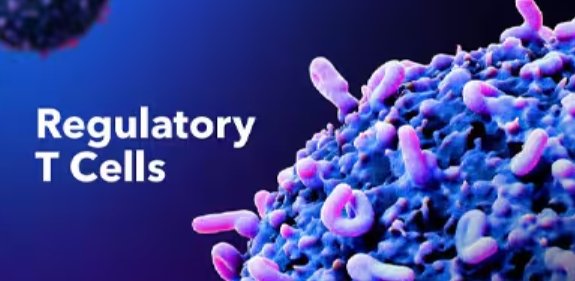
The Nobel Assembly at Karolinska announced the 2025 Physiology or Medicine prize in October. It went to Mary E. Brunkow at the Institute for Systems Biology, Fred Ramsdell at Sonoma Biotherapeutics, and Shimon Sakaguchi at Osaka University. What they figured out, collectively, was how the immune system knows when to stop: regulatory T cells (T-regs) controlled by a gene called FOXP3.
Brunkow's group at Celltech, back in the late 1990s, spent long nights chasing a lethal autoimmune problem in mice. Marker maps, gels that nearly worked, the usual grind. Eventually they landed on FOXP3. It turned out to be the switch that makes ordinary T cells into regulators. Paediatricians later encountered the same gene when children presented with IPEX syndrome.
But Ramsdell was the connector. He saw FOXP3 as one leg of a relay: mouse genetics handing off to human genetics, then cell therapy, then manufacturing. He likes to say science moves when you make room for whoever comes next.
On the other hand, Sakaguchi took a different path. He'd been interested in "suppressor T cells," which had fallen out of favour in the 1970s. Most researchers had moved on. He stuck with it, rebuilt the evidence more carefully, and eventually linked CD4+CD25+ cells to FOXP3. Someone once asked him why he kept coming back to the same question. He said the answer keeps helping patients, a little more each year.
The evidence, once it came together, was hard to dismiss. Mice with FOXP3 mutations got sick. Give them working copies and they recovered. Humans with mutations in the same gene developed IPEX. Gene, function, mechanism: it all lined up.
Immune tolerance isn't one checkpoint. It's layered. The thymus handles the first pass, weeding out T cells that react too strongly to self. But that's not the whole system. Out in the blood and tissues, FOXP3+ T-regs keep watch, reading context and tamping down whatever self-reactivity slipped through earlier. You get deletion where certainty is high, active regulation where it isn't.
When T-regs don't work properly, you see more autoimmune disease: type 1 diabetes, MS, inflammatory bowel conditions. When they function well, inflammation clears up and tissues heal without as much collateral damage. During pregnancy, T-regs help tolerate the foetus. Tumours, unfortunately, have learned to recruit them to dampen immune pressure, which is something newer therapies are trying to undo. The gut is a good example of all this in action: constant exposure to foreign material, mostly harmless, with T-regs keeping things peaceful while still watching for genuine threats.
Once researchers understood the circuitry, engineering became feasible. CAR-T-regs (chimeric antigen receptor regulatory T cells) can be designed to hit specific targets with a light touch. Protect a transplant without shutting down the whole immune system. Or quell autoimmunity while leaving host defence intact. There's also a pharmacological route: nanoparticles loaded with FOXP3 mRNA, or localised cytokine delivery.
Computational tools are changing how this work gets done. Deep-learning models try to predict where engineered cells will end up and how stable they'll be. Simulations map out antigen-cell-tissue interactions before anyone gets dosed. Some groups build "digital twins" of patients, feeding in lab results and imaging to test dosing strategies in silico first. Is one big infusion better, or several smaller ones? You can model it.
Tigran Petrosian once said he tries to avoid chance, that those who rely on it should play roulette, not chess. That's the idea behind all this modelling. Take the gamble out of it. Researchers run simulations to see whether receptors might cross-react with the wrong peptides, checking against each patient's HLA profile. Safety switches get tested across thousands of hypothetical inflammatory situations. In cancer treatment, the models help figure out when to reduce T-reg activity locally (so the immune system can attack the tumour) without wrecking tolerance elsewhere. Humans can oversee this kind of decision, but actually computing it by hand? Not really possible.
The goal now is making this personal. Match the cell type to the patient, get manufacturing reliable, catch problems before they happen. Whether that takes five years or fifteen, nobody knows. But the groundwork is there.
Saurabh Singal, CEO & Founder of Molecule AI