Bengaluru's next decade will be decided at scale-up
September 12, 2026 | Saturday | Views | By Ankit Alok Bagaria, Co-founder & CEO, Loopworm
Biomanufacturing matters to Bengaluru beyond its own revenue line
India’s bioeconomy has grown 16x within a decade from $10 billion to $165+ billion between 2014-2024 and with an ambitious target of a $1 trillion bioeconomy by 2040. Backing this ambition are startups which have also grown almost 2x to about 10,000 in just half a decade between 2021-2025.
Our first spurt was backed by generics, contract research and services. The next decade will be anchored around biomanufacturing that scales with plant, process and throughput. And Bengaluru is at the epicentre of that shift.
Bengaluru’s biotech movement started in 1978 with a garage startup and a seed capital of Rs 10,000. Biocon then went on to prove that India can play at a global scale, manufacturing industrial enzymes, biosimilars, recombinant insulin, CRO services and more.
While the private sector led, the government followed suit. From NCBS to IBAB to inStem to C-CAMP, the Bangalore Life Sciences Cluster (BLiSC) grew through the 2000s. Karnataka became the first Indian state to treat Biotechnology as a category in itself and bring out a biotechnology policy in 2001. It is the second largest contributor to India’s bioeconomy.
As of 2025, Karnataka’s bioeconomy stands at $39.2 billion, 21% of India's total. While biopharma forms the largest block at $16.44 billion, bioservices and digital health form about a quarter, and bioindustrial and biomanufacturing, at $11.46 billion is the fastest-growing of the three. As the Karnataka Biotechnology Policy 2024-2029 targets a $100 billion state bioeconomy, the fastest-growing segment has a critical role to play.
In that context, Bengaluru is arguably better positioned than any other Indian city because it is the one place where every input already exists in some form: forty-plus years of fermentation and bioprocess know-how, a research base, government backing through BIRAC's grants, Elevate Karnataka, the Department of Biotechnology's BioE3 policy, the Rs 1 lakh crore RDI Fund. Alongside that, there is an emerging class of startups in synthetic biology, cell and gene therapy, and AI-native drug discovery who are choosing to build around owned intellectual property rather than simply fee-for-service work.
What Bengaluru does not yet have, at the scale the next decade demands, is enough shared, de-risked, capital-intensive infrastructure to let the next thousand biotech start-ups go from a promising strain or molecule to a commercially manufacturable product. Most attrition happens, not at the molecule, but on the way to the tonne. This includes pilot lines, GMP-adjacent processing space, downstream purification, export-market ready documentation. Without raising institutional capital and building a plant, no startup has the revenue to justify either. And this is the most consequential gap the state must close.
The second constraint is more complex. Scientists fluent in money, markets and how a product gets sold are the scarcest input in Indian biotech. This is not for the lack of biotech talent, which the city has in abundance. Rather, the talent that has seen hyper-aggressive growth from the inside, talent where technical and commercial teams speak the same vocabularies. No policy instrument produces them. Companies that put technical people in front of customers do.
Biomanufacturing matters to Bengaluru beyond its own revenue line. This city's growth has been narrated through software for twenty years, and it has been a good story. But an economy whose output is almost entirely digital rides one global cycle and employs a narrow band of people.
Biomanufacturing is one of the few sectors where Bengaluru holds both halves: the science to design a molecule and the capability to make it at volume. It builds plants, technicians, supply chains and export tonnage, not only desks. The software decade was won on talent arbitrage, the biology decade will be won on the ability to manufacture. That is still a choice this city gets to make.
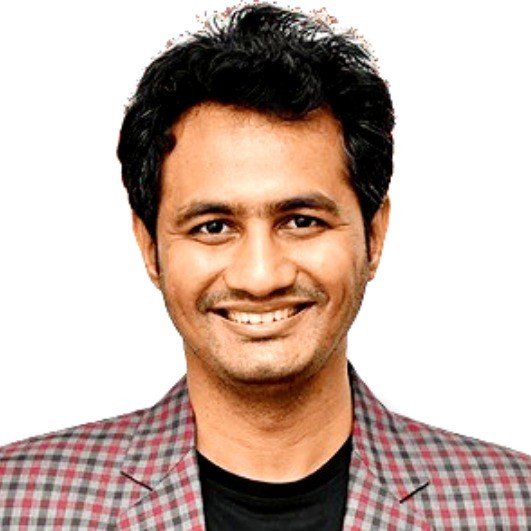
Ankit Alok Bagaria, Co-founder & CEO, Loopworm