IIT-G researchers develop eco-friendly bacterial approach to treat toxic textile dyes
September 16, 2026 | Wednesday | News
Novel Brevundimonas bacterium achieves 98.50% degradation of ‘Direct Blue-6’
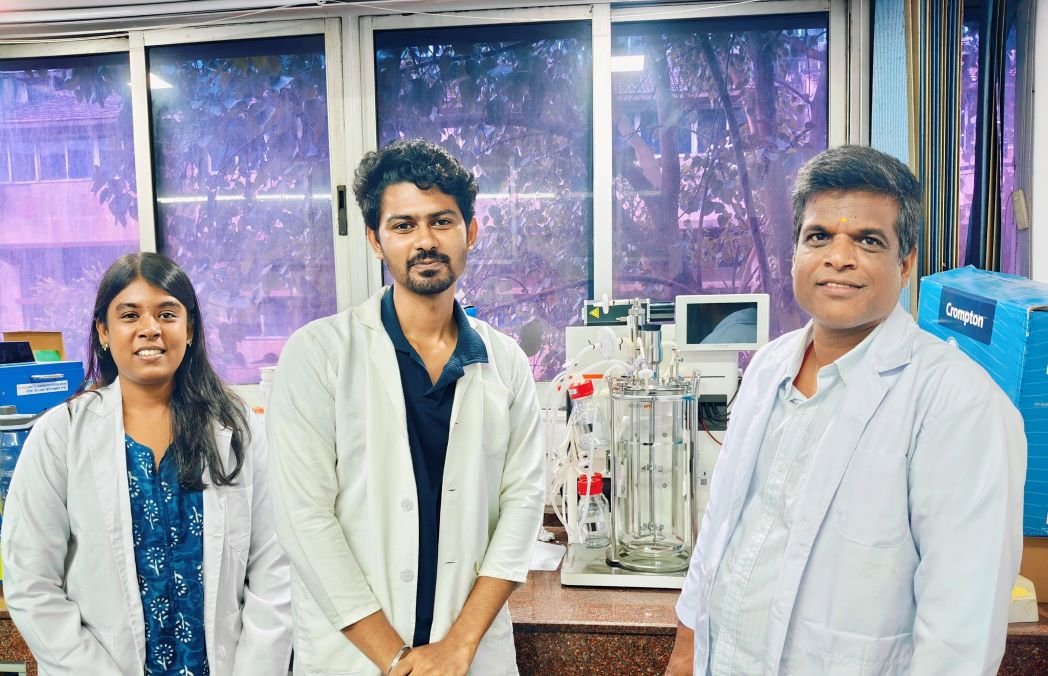
A team of researchers at the Indian Institute of Technology Guwahati (IIT-G) has developed an eco-friendly biological approach to treat textile wastewater containing toxic azo dyes.
The research provides a scientific foundation to develop biological treatment systems for textile wastewater containing azo dyes. The approach could offer an eco-friendly alternative or complementary treatment to conventional chemical and physicochemical methods.
The research demonstrates the ability of a novel bacterium called ‘Brevundimonas sp. AJZ05’ to degrade 98.50% of Direct Blue-6 (DB-6), a widely used synthetic dye, while producing degradation products that were found to be non-toxic after bacterial treatment.
The research was supported by the Ministry of Education, Government of India, through the Prime Minister's Research Fellowship (PMRF), with support from the Department of Chemical Engineering & Technology, IIT (BHU), Varanasi.
Textile wastewater can contain azo dyes that are difficult to remove because of their stable chemical structure. These dyes contain an azo bond (–N=N–), which contributes to their colour and chemical stability, making them resistant to conventional treatment processes. Untreated textile effluents can pose risks to aquatic ecosystems and may have implications for human health.
Conventional chemical and physicochemical treatment methods can also be energy-intensive and may generate secondary pollutants. Importantly, simply removing the visible colour from wastewater does not necessarily eliminate the underlying toxicity.
Speaking about the current status of the research and the real-world applications, Dr Selvaraju Narayanasamy, Associate Professor, Biochemical and Environmental Engineering Laboratory, Department of Biosciences and Bioengineering, IIT Guwahati said, “We are now working towards translating the laboratory-scale findings into a practical and scalable wastewater treatment technology. The next step involves immobilising Brevundimonas sp. AJZ05 in a suitable support matrix to improve its stability, operational performance and reusability. We plan to develop a continuous treatment system for azo-dye removal from textile wastewater, with the long-term goal of advancing the microbial platform towards industrial application.”